Dental Implants Poway

Searching for dental implants Poway families trust? Dr. Khizer Hafeez, DDS and the team at North County Aesthetics & Implants build every treatment plan around a simple idea: care should be thorough, personal, and handled by people who already know your history, since a missing tooth changes more than your smile and can affect your bite, your confidence, and how comfortably you eat and speak. That’s where implants set themselves apart from dentures and bridges.

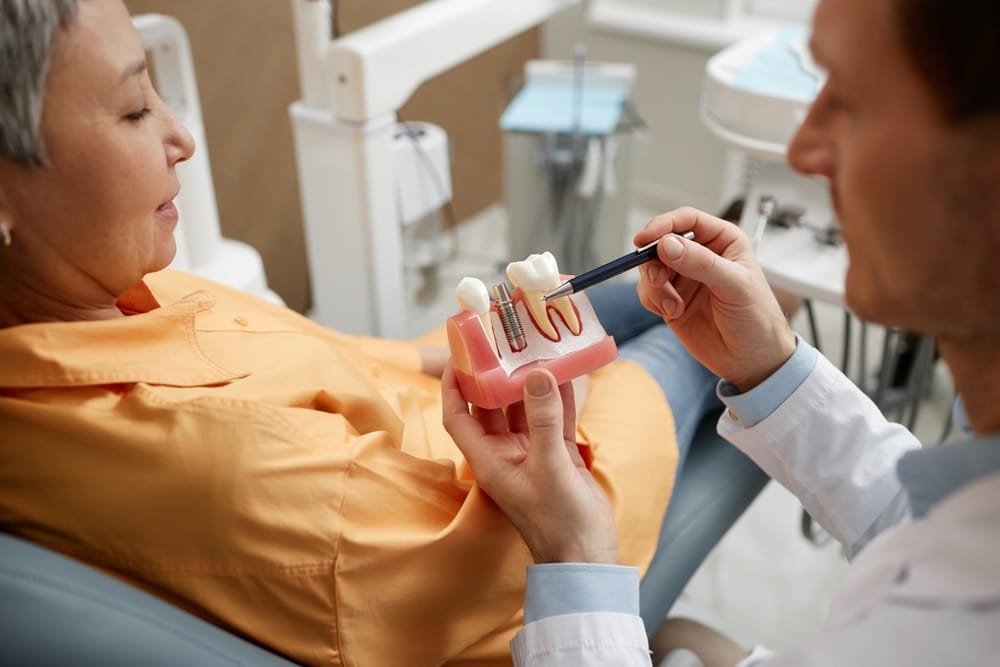
A conventional bridge requires grinding down the healthy teeth next to a gap, a denture rests on the gum tissue without addressing the bone underneath, and a dental implant instead gives the jaw something to hold onto, using a titanium post that integrates directly with the bone to support a crown, bridge, or full denture without touching the teeth around it. For patients managing periodontal disease, misaligned teeth, or years of unaddressed tooth loss, our dental team handles every stage of dental implant treatment in-house, from consultation through final restoration.

Request Appointment

Meet the Doctors

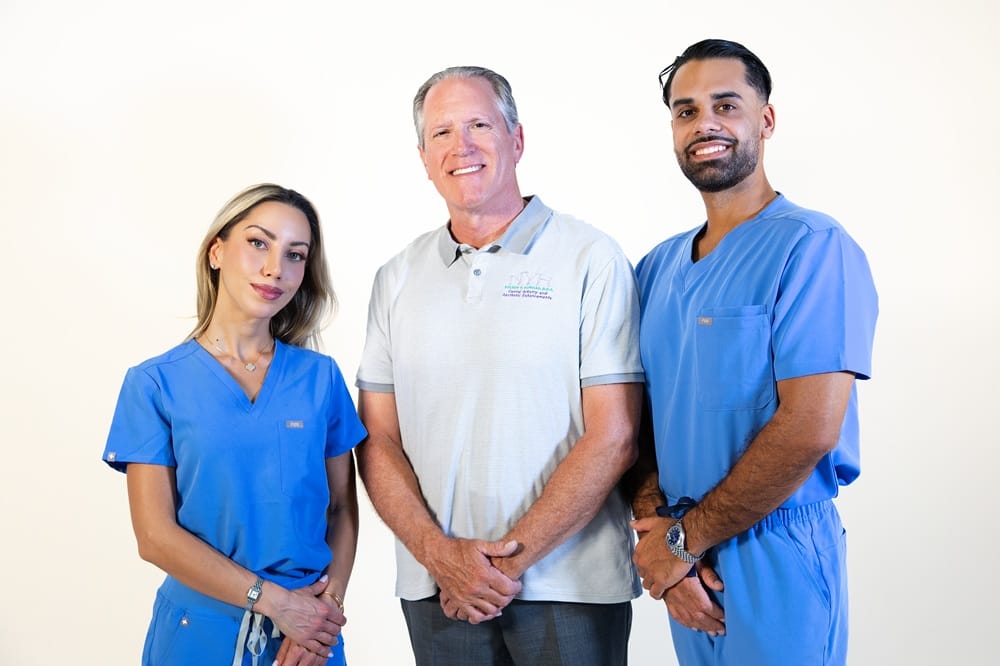
Dr. Nelson Y. Howard has spent more than 40 years building a reputation for precise, evidence-based implant and restorative dentistry, backed by Accredited Member status with the American Academy of Cosmetic Dentistry, a distinction held by fewer than 400 dentists worldwide. Dr. Khizer Hafeez earned his Doctor of Dental Surgery at New York University College of Dentistry, where his internationally recognized research on cardiovascular disease shaped the evidence-based lens he brings to every implant case. Dr. Dariyan Ayazi rounds out a team that can manage surgical placement, restoration, and everything in between, so no phase of your care gets handed off to another office.

Learn About Your Doctor!

North County Aesthetics & Implants

Are you experiencing the consequences of missing teeth?

Is dental implant treatment right for you?

Missing a tooth changes more than your smile. It changes how you chew, how adjacent teeth shift over time, and how the jawbone responds to the absence of a root. Before committing to any treatment, it helps to know whether implants fit your specific situation.

Implant Options at North County Aesthetics & Implants

Single Implant Crowns

A single implant crown replaces one missing tooth without altering the teeth on either side. The titanium post integrates with the surrounding bone, and once that process is complete, a custom crown is attached. At North County Aesthetics & Implants, the SprintRay Midas system produces same-day 3D-printed and pressed crowns, reducing the number of appointments needed to finish treatment.

A 10-year study of single-tooth implants found a 97.4 percent implant survival rate, with 79.6 percent of adjacent natural teeth remaining intact or only minimally restored. That combination of durability and adjacent-tooth preservation is why single crowns are the first choice whenever enough bone is present.

Implant Bridges

An implant bridge replaces multiple consecutive missing teeth using implants as anchors instead of grinding down natural teeth. Rather than placing one implant per tooth, the bridge spans the gap with a prosthetic supported at each end. For patients missing two or three teeth in a row, this often costs less than placing individual implants at every site.

A meta-analysis of implant-supported prostheses reported a cumulative five-year survival rate of roughly 93.5 percent for fixed partial dentures, alongside a meaningful complication rate. High survival with real maintenance considerations is the honest picture your doctor will walk you through.

Implant-Supported Dentures

Implant-supported dentures solve the most common complaint patients have about conventional dentures: movement. Instead of resting on gum tissue, the denture attaches to implants placed in the jaw, eliminating the shifting that makes conventional dentures difficult to live with. The implants also help slow the bone loss that conventional dentures accelerate over time.

A randomized, within-subject controlled trial found that implant-retained overdentures significantly increased patient satisfaction, dental function, and quality of life compared with conventional dentures worn by the same patients. That within-subject design matters because it isolates the implant’s contribution rather than comparing separate groups of patients.

All-on-X (Including All-on-4)

All-on-X is a full-arch restoration that uses four to six implants to support a complete set of fixed teeth. The implants are often angled to maximize contact with available bone, so many patients avoid grafting even with less-than-ideal bone volume. In qualifying cases, a provisional set of teeth can be placed the same day as surgery.

A systematic review of 34 studies with at least five years of follow-up found a mean weighted implant survival rate of 97.4 percent among immediately loaded implants. Case selection and bone assessment remain the deciding factors in whether a patient qualifies.

3 on 6

The 3 on 6 protocol uses six implants to support three prosthetic bridge sections that together restore a full arch. The higher implant count distributes bite load across more anchor points than a four-implant protocol. The prosthetic sections are also retrievable, so your doctor can remove them for maintenance without disturbing the underlying implants.

A five-year outcome study of patients treated with six-implant-supported fixed prostheses reported a 94.5 percent mean patient satisfaction rate across mastication, phonetics, and comfort. That level of satisfaction, sustained over years of function, reflects what higher implant counts are designed to deliver.

How We Approach Dental Implant Treatment, Step by Step

Your Initial Oral Health Consultation

Your first visit starts with a real conversation, not a rushed exam. We review your dental and medical history, current medications, and any signs of periodontal disease that could affect healing. If you’d like a head start, our new patient forms let you fill out that history before you arrive. From there, we talk through what you want from treatment, whether that’s replacing one tooth or planning a full-arch restoration.

A Treatment Plan Built Around Your Bite and Bone Density

Your bone density and nerve locations, mapped during the scan, determine which implant solution actually fits: a single crown, a bridge, or a full-arch option. Treatment methods and timelines vary from there, since some patients need healing time before placement and others qualify for a faster path. You’ll see the full plan before anything is scheduled, so nothing moves forward without your understanding of each step.

Surgical Implant Placement Using Digital Scanning Technology

Local anesthesia keeps this comfortable, with sedation available for patients who’d rather not be fully aware of the procedure. The titanium post is set into the jawbone using the same imaging captured at your consultation. In qualifying cases, same-day temporary restorations are possible through the SprintRay Midas system, and your dental team checks healing progress over the following weeks before attaching the final crown, bridge, or denture.

Post-Operative Instructions for Faster Healing

The post-operative instructions we walk through before you leave cover the basics: gentle brushing and flossing around the implant site, and avoiding hard or sticky foods while it heals. Skipping these steps is the most common reason healing takes longer than expected. Call us if anything feels off, since we’d rather address it early than have you wait it out.

Scheduled Dental Examinations to Track Your Progress

A follow-up exam confirms the implant has fully integrated and is functioning the way it should. After that, we keep you on a standard checkup schedule so we catch gum changes or bite shifts early, before they cause damage. Dr. Khizer Hafeez and the team track your case at every visit, which keeps long-term outcomes predictable.

What happens if you do nothing?

Financial Implications of Delayed Treatment

Waiting to replace a missing tooth rarely saves money, and it often costs significantly more in the long run. As bone resorption progresses at the extraction site, what might’ve been a straightforward implant placement becomes a case requiring bone grafting, additional imaging, and more surgical appointments before the implant can even be placed. Patients who delay treatment for years frequently find themselves facing full mouth reconstruction costs that far exceed what earlier intervention would’ve required.

Supporting Research on Financial Consequences

The scale of this problem is documented at a population level. A 2024 Global Burden of Disease analysis found that the combined direct and indirect costs of managing severe periodontitis and edentulism reached approximately $154 billion in the United States in a single year. That reflects the pattern described above: a manageable single-tooth case becomes a far more expensive, multi-procedure treatment plan.

Health Implications of Delayed Treatment

A missing tooth sets off a chain of events in the surrounding bone and adjacent teeth that compounds over time. The bone at the site begins to shrink within months because there’s no longer a root to stimulate it, and neighboring teeth start to drift into the gap, changing bite alignment in ways that create uneven wear on otherwise healthy teeth. Difficulty chewing on the affected side often leads patients to favor one side of the mouth, which places excessive stress on teeth that were never designed to carry that load.

Supporting Research on Health Consequences

Research on chewing function backs up what patients experience firsthand. A review published in the journal Nutrients found that patients with fewer than three posterior functional tooth units experience a 30 to 40 percent reduction in masticatory performance, a decline closely tied to lower intake of protein, fiber, and key micronutrients. Losing even a few back teeth changes what a person eats and how well they can eat it.

Safety Implications of Delayed Treatment

Teeth that have shifted or become structurally compromised due to changes in bite load are at higher risk of fracture, and a tooth that cracks at the root often can’t be saved. Research has also linked untreated periodontal disease and chronic oral infection to broader systemic health concerns, including cardiovascular disease.

Supporting Research on Safety Risks

The systemic risk isn’t speculative. A 2024 scientific statement from the American Heart Association concluded that periodontal disease independently increases the risk of atherosclerotic cardiovascular disease, citing consistent evidence from systematic reviews linking periodontal disease to cardiovascular events, stroke, and cardiac death. That’s precisely the kind of far-reaching consequence Dr. Hafeez’s research background helps him recognize and explain to patients.

FAQs

What is the success rate of dental implants?

Studies consistently report success rates above 90 percent over ten or more years. Factors that support predictable outcomes include adequate bone volume at the placement site, good overall health, non-smoking status, and consistent follow-up care. Your doctor will review your specific situation during the evaluation to give you a realistic picture of what to expect based on your individual anatomy and health history.

Can a dental implant be placed the same day a tooth is extracted?

Yes, North County Aesthetics & Implants offers immediate implant placement for qualifying patients. When the bone and gum tissue at the extraction site are in good condition, placing the implant at the same appointment as the extraction can reduce overall treatment time. Not every extraction site is appropriate for this approach, so your doctor will evaluate the site carefully before recommending it.

How does the Trios 6 scanner change the implant planning process?

The Trios 6 intraoral scanner produces a digital model of your bone structure and bite without the discomfort of traditional impression materials. That level of detail allows more accurate implant positioning before surgery, supporting more predictable outcomes and reducing the margin for error during placement. It’s one reason North County Aesthetics & Implants can handle complex implant cases entirely in-house.

What happens to the jawbone when a tooth is missing?

When a tooth is lost, the jawbone in that area no longer receives the stimulation it needs to maintain its density and shape. Within the first year, the bone can lose a measurable percentage of its width, and this continues over time if you don’t replace the tooth. Dental implants are the only replacement option that restores that stimulation by functioning like a natural tooth root.

What's the difference between an implant-supported bridge and a traditional bridge?

A traditional bridge is anchored by grinding down the healthy teeth on either side of the gap, which permanently alters those teeth to support the restoration. An implant-supported bridge instead anchors to titanium posts placed in the jawbone, leaving neighboring natural teeth untouched. That difference also affects the jawbone itself, since implants continue to stimulate bone at the site while a traditional bridge does nothing to prevent the bone loss underneath it.

Start Your Dental Implants Poway Consultation Now!

Ready for dental implants Poway patients can rely on? Dr. Khizer Hafeez, DDS, and the team at North County Aesthetics & Implants would rather answer your questions in person than have you guess your way through treatment options, so reach out through our contact page or call whichever office is closer: San Marcos at 760.330.8146 or Rancho Bernardo at 858.758.4860. Either way, you’ll walk out with a plan built around your bone, your bite, and your budget, not a generic recommendation.

Request Appointment
San Marcos
Rancho Bernardo