Dental Implants Carlsbad

North County Aesthetics & Implants is the team behind the dental implants Carlsbad residents count on for a coordinated, single-office experience: four decades of collective implant expertise, in-house imaging, and same-day crown technology, all under one roof, whether you’re addressing a single missing tooth, gum disease, cracked teeth, or rebuilding an entire arch. Dr. Khizer Hafeez, DDS, and the team understand that tooth loss affects more than your smile; it changes how you eat, speak, and feel about your appearance.

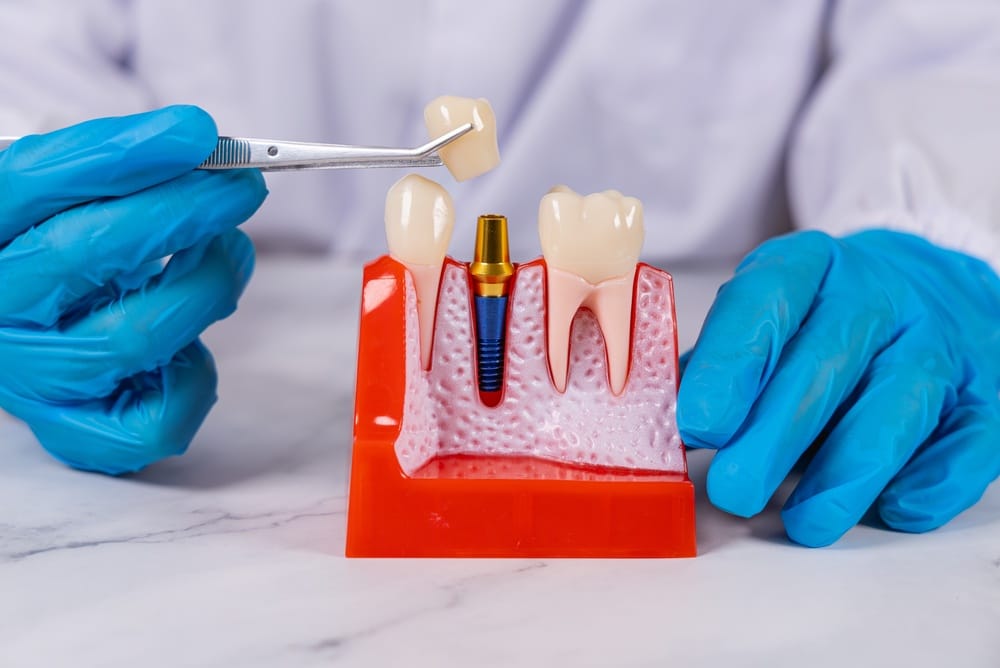
A dental implant replaces both the visible crown and the artificial tooth root that anchors it, using titanium posts placed directly into your jawbone to recreate the entire tooth structure, not just the part you can see. Bone loss begins as soon as a tooth is missing and doesn’t reverse on its own, but the post fuses with the surrounding bone during the healing period, giving you an artificial tooth that functions like the real thing.

Request Appointment

Meet the Doctors

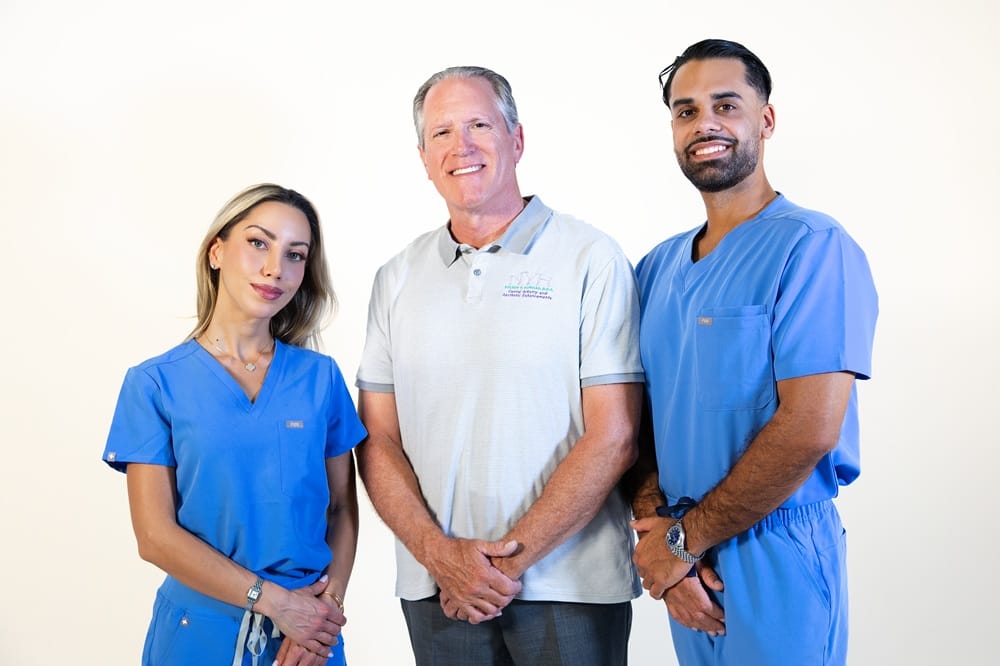
Dr. Nelson Y. Howard established this practice in 1992 and has spent more than 40 years developing expertise in implant and restorative dentistry. He holds accredited membership in the American Academy of Cosmetic Dentistry, served as a founding member of the West Coast Society for Cosmetic Dentistry, completed a General Practice Residency at the V.A. Medical Center in West Los Angeles, and has logged over 2,000 hours of continuing education. 

Dr. Khizer Hafeez earned his Doctor of Dental Surgery from New York University College of Dentistry and brings an evidence-based approach to every treatment decision, shaped by internationally recognized research in cardiovascular disease. Dr. Dariyan Ayazi completes a dental team that handles the full range of implant, restorative, and cosmetic care without referring patients out for any phase of treatment.

Learn About Your Doctor!

North County Aesthetics & Implants

Are you experiencing tooth loss or a missing tooth?

Is a dental implant right for you?

If you’ve lost a tooth or you’re facing an extraction, you’re probably wondering what your options are and whether implants make sense for your situation. The sections below walk through the questions most patients ask before scheduling a dental consultation.

Implant Solutions We Offer

Single Implant Crowns

A single implant crown replaces one missing tooth with a titanium post and a custom crown that matches your surrounding teeth in shape, color, and bite. At this practice, we fabricate the crown using SprintRay and Midas technology, producing precision-milled or 3D-printed restorations in-house rather than sending them to an outside lab. This approach preserves the adjacent teeth entirely.

Single implant crowns consistently show high long-term survival; a systematic review pooling outcomes for implant-supported single crowns found survival rates of 96.3% at 5 years and 89.4% at 10 years, among the highest of any restorative option studied. The main argument against them is the upfront investment and the healing time required before final crown delivery, so for patients who aren’t candidates due to insufficient bone, a short-span bridge may be a faster path to restoration.

Implant Bridges

An implant-supported bridge replaces two or more adjacent missing teeth using implants at either end of the gap, rather than grinding down natural teeth to serve as anchors. It’s a practical option when multiple teeth in a row are missing, and individual implants at each position aren’t the most efficient path forward.

Implant bridges offer a strong middle ground between single implants and full-arch solutions, and a systematic review of implant-supported fixed dental prostheses, the technical term for implant bridges, found survival rates of 95.4% at 5 years and 80.1% at 10 years, rising to 93.9% at 10 years for metal-ceramic designs. They preserve the bone beneath the implant sites. However, the area beneath the pontic doesn’t receive the same stimulation as a directly implanted tooth, which is why some patients and clinicians prefer individual implants at each position for maximum bone preservation.

Implant-Supported Dentures

Implant-supported dentures attach to strategically placed implants rather than resting on the gum tissue like a conventional denture, giving you much more stability while eating and speaking. The implants also continue to stimulate the jawbone beneath them, slowing the bone loss that conventional dentures accelerate over time.

The evidence supporting implant-retained overdentures is strong, particularly for patients who have struggled with the fit and function of conventional dentures. A systematic review and meta-analysis of randomized controlled trials comparing implant-supported mandibular overdentures to conventional dentures found that patients receiving implant support consistently reported better scores on the Oral Health Impact Profile, the standard measure of denture-related quality of life.

All-on-X Dental Implants

All-on-X is a full-arch restoration that replaces an entire row of teeth using four or more implants to support a fixed, non-removable prosthetic arch you care for much like natural teeth. The posterior implants are placed at an angle to maximize contact with available bone, so this protocol can often work even in patients with moderate bone loss without requiring grafting first.

All-on-X has a strong clinical track record, with a systematic review of the All-on-4 treatment concept finding a survival rate exceeding 99% for follow-up periods longer than 24 months, supporting its use as a predictable option for the atrophic jaw. Critics point out that because only four implants support the arch, losing a single implant has a larger impact on the overall restoration, and complication rates like peri-implantitis, while generally low, tend to run higher for full-arch cases than for single-tooth implants.

3 on 6 Dental Implants

The 3 on 6 protocol places six implants in the arch to support three separate bridges, distributing chewing load across more anchor points than a four-implant design and reducing stress on any single implant. Patients who want a full-arch fixed solution with more support points often find this approach worth discussing during their consultation.

Six-implant full-arch designs distribute load more evenly than four-implant protocols, which can reduce long-term implant stress; a 2025 retrospective comparative cohort study also found comparable long-term survival between four- and six-implant designs, with implant loss correlating more with jaw type and patient age than with implant count. The trade-off is that placing six implants requires more bone volume and a longer surgical appointment, so in patients with significant bone loss, the angled design used in All-on-X may be the more accessible path to a fixed full-arch restoration.

What to Expect During Your Dental Implant Process

Your Initial Dental Consultation and Bone Assessment

Your first visit centers on understanding your dental anatomy and what led to your tooth loss. Dr. Hafeez reviews your oral health history and takes digital scans with the Trios 6 and Dexis OP 3D system to assess your bone density and confirm you have enough bone volume to support an implant. During this thorough dental consultation, he answers your questions about the dental implant process and gives you a clear picture of your candidacy before you make any decisions.

Building a Treatment Plan Around Your Bone Density

Using your scans, the team builds a treatment plan tailored to your bone density, gum health, and goals. This plan outlines which implant solution fits best, whether that’s a single crown, bridge, or full-arch option, along with a realistic timeline based on how much healing your bone needs before placement. You’ll leave this visit knowing exactly what to expect at each stage of care at our dental clinic.

Implant Placement With In-House Imaging and Technology

Implant placement happens under your chosen sedation dental option for comfort throughout the procedure. The titanium post is positioned into the jawbone with precision, guided by the same in-house imaging captured during your consultation rather than a scan sent out to another facility. Depending on your case, immediate placement or a staged approach determines how quickly you move toward your final restoration.

Caring for Your Implant During the Healing Period

After placement, simple habits protect your healing implant and surrounding tissue. Stick to soft foods initially, keep the area clean, and attend any scheduled check-ins so the team can monitor integration. Good aftercare during the healing period sets the stage for long-lasting results.

Your Follow-Up Visit and Final Crown Delivery

Once your implant has fully integrated, we fabricate and fit your final crown using in-house SprintRay and Midas technology. Regular dental visits after that keep your artificial teeth and remaining natural teeth in good shape. This ongoing relationship helps catch small issues before they become bigger ones.

Alternative Treatments: What happens if you do nothing?

Financial Implications of More Invasive Solutions

Waiting to address a missing tooth almost always increases the total cost of the eventual treatment. Bone loss in the months and years after an extraction can require bone grafting before an implant can be placed, adding time and expense to the case. Acting earlier, while the bone is still present, keeps treatment simpler and the overall cost lower.

A peer-reviewed study in the Journal of Dental Research estimated worldwide direct treatment costs for dental diseases at $298 billion annually, roughly 4.6% of global health expenditure, with additional productivity losses from missed work layered on top. That figure reflects treatment across every stage of disease, including more extensive procedures such as grafting and full-arch reconstruction that untreated cases often require by the time patients finally seek care.

Health Implications of More Invasive Solutions

The health consequences of untreated tooth loss extend beyond the visible gap in your smile. Bone resorption beneath the extraction site is progressive, and as the bone shrinks, adjacent teeth begin to shift toward the open space. Patients missing multiple teeth who don’t address the loss often experience nutritional changes as well, since chewing ability is directly tied to the range of foods you can comfortably eat. A restricted diet over years carries its own systemic health consequences.

A National Institutes of Health monograph on oral health across the lifespan notes that losing natural teeth affects a person’s ability to eat nutritious food and changes how someone eats and socializes around meals. These effects compound the longer a missing tooth goes unaddressed. For patients missing several teeth, that dietary shift over years is a real, if easy to overlook, health cost of delay.

Safety Implications of More Invasive Solutions

An untreated extraction site carries infection risk, particularly in the early weeks after a tooth is removed. Beyond the acute phase, long-term bone loss can compromise the jaw’s structural integrity and the stability of surrounding teeth. Advanced bone loss over many years can also increase the risk of jaw fracture in the affected area, a complication that is far more difficult to manage than the original tooth loss would have been.

A peer-reviewed review of age-related eating and swallowing changes found that adults over 65 face a choking risk roughly seven times higher than young children, a risk tied to tooth loss and reduced chewing function. Separately, a systematic review of jaw fractures in edentulous patients found that severe, long-term bone loss leaves an atrophic mandible more vulnerable to fracture from minimal trauma and harder to treat when it happens.

FAQs

How painful is dental implant placement?

Most patients report less discomfort than they expect, since implant placement is performed with sedation dental options and local anesthesia. Any soreness afterward is typically manageable with over-the-counter pain relief and generally fades within a few days. Swelling and mild bruising are common but temporary parts of healing. If pain increases rather than improves after the first few days, contact the office promptly.

Will my dental implant look like a natural tooth?

Yes, implant crowns are custom-matched to your surrounding teeth in shape, size, and shade for a natural-looking smile. Because the restoration is anchored in bone, it moves and functions like your original tooth rather than shifting the way removable prosthetic teeth can. Most patients say others can’t tell which tooth is the implant. Your dental team will take detailed dental impressions to ensure the fit and appearance are accurate.

How long do dental implants typically last?

With proper care, dental implants can last well beyond ten years, and many patients keep the same implant for life. The crown attached to the post may need replacement sooner due to normal wear, typically after ten to fifteen years. Good oral hygiene and regular dental visits are the biggest factors in long-term success. Avoiding habits like teeth grinding also helps protect your investment.

What can I eat while my implant heals?

During the initial healing period, sticking to soft foods helps protect the surgical site while the bone integrates with the titanium post. Foods like soups, yogurt, and mashed vegetables are good options in the first week. As healing progresses, you can gradually reintroduce firmer foods based on your dentist’s guidance. Avoiding hard, crunchy, or sticky foods too soon can interfere with proper healing.

Can I get a dental implant if I have gum disease?

Active gum disease needs to be treated before implant placement, since healthy gum tissue is essential for successful integration. Once periodontal therapy brings the condition under control, many patients become good implant candidates. Ongoing gum health monitoring after placement also helps protect the implant long term. Your dental team will evaluate your gum health during your initial consultation.

Bring Your Smile to Dental Implants Carlsbad Experts

Take the next step with our dental implants Carlsbad experts and put your smile in the hands of a team that treats every stage of your care personally. Dr. Khizer Hafeez and the North County Aesthetics & Implants team are ready to help, so call San Marcos at 760.330.8146 or Rancho Bernardo at 858.758.4860, whichever office is closer, or request an appointment online and we’ll confirm a time that works for you.

Request Appointment
San Marcos
Rancho Bernardo