Restorative Dentistry

For most of dental history, fixing a cracked or decayed tooth meant two appointments and weeks with a temporary crown. At North County Aesthetics & Implants, Dr. Khizer Hafeez, DDS, and the restorative team use SprintRay same-day technology to scan, design, and fabricate your crown in a single visit. Restorative dentistry is the branch of dental care that repairs damaged teeth and restores the function you rely on daily, covering what Wikipedia describes as the study, diagnosis, and integrated management of diseases of the teeth and the structures that support them.

The same-day part is more recent: digital scanning and in-office fabrication trace back to the first CAD/CAM system used in dentistry, developed in the 1970s, decades before chairside technology made single-visit crowns realistic. If you’re dealing with a fractured molar, a worn-down crown, or a tooth that’s been sensitive for months, that same digital workflow now gets you back to a comfortable bite in one appointment instead of two.
Request Appointment

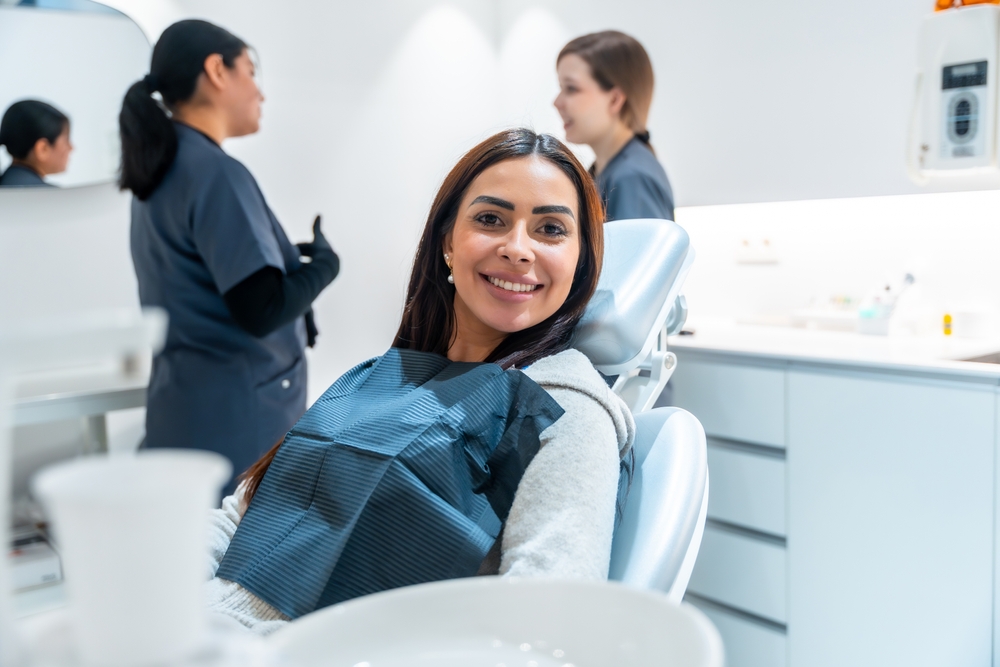
Smiling woman in a dental chair with staff conversing in the background

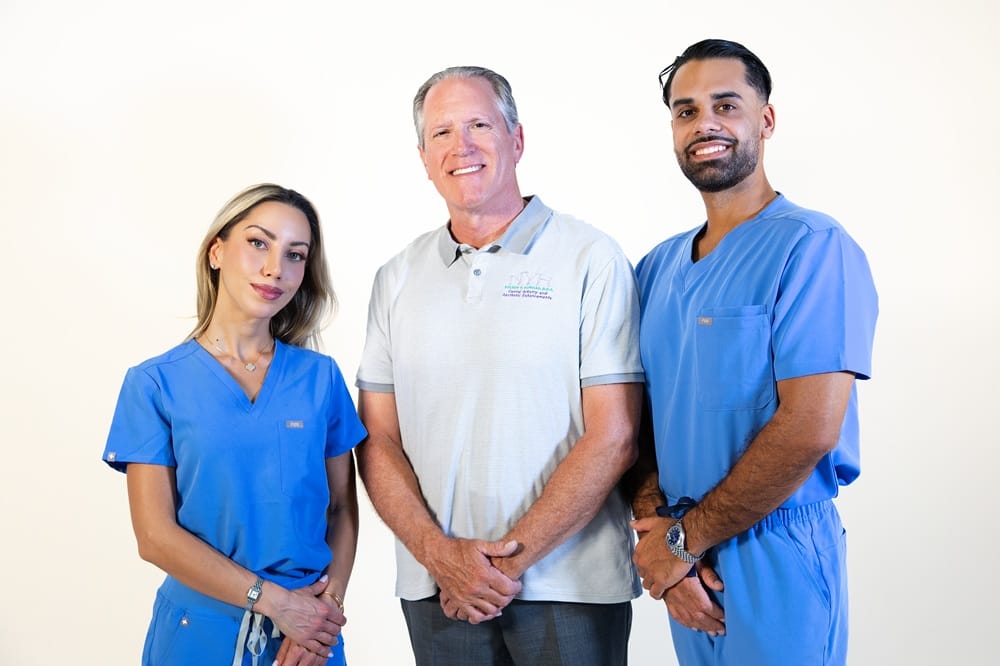
Meet the Doctors

Dr. Khizer Hafeez, DDS earned his Doctor of Dental Surgery from New York University College of Dentistry, and his research background shapes his approach to diagnostic accuracy. Dr. Nelson Y. Howard, DD,S founded the practice in 1992 and holds accredited membership in the American Academy of Cosmetic Dentistry. Dr. Dariyan Ayazi, DDS rounds out a team using the Trios 6 scanner and Dexis OP 3D imaging to evaluate your teeth before restorative work begins.

Learn About Your Doctor!

North County Aesthetics & Implants

Conditions, Symptoms, and Pain Addressed by Same-Day Restorations with SprintRay Technology

Tooth decay, fractures, and enamel wear are the most common reasons patients need restorative care, causing temperature sensitivity, pain when biting, and visible cracks or chips. These conditions are widespread: nearly 21% of adults ages 20 to 64 have one or more permanent teeth with untreated decay, according to the CDC’s 2024 Oral Health Surveillance Report. Same-day restorations address these problems by producing a finished crown within a single appointment.

Recognizing the Problem

A rough edge, intermittent discomfort when chewing, or sensitivity to cold drinks are often the first signs that tooth structure has been compromised. The National Institute of Dental and Craniofacial Research notes that early tooth decay usually has no symptoms, and pain typically appears only after decay has advanced. Patients who address these early signs tend to need less extensive treatment.

When should you seek a professional?

Persistent tooth pain, visible cracks, sensitivity that lingers for more than a few days, or a loose crown are all reasons to schedule an evaluation rather than manage things at home. The Journal of the American Dental Association’s patient guidance is clear on this point: whether it’s a short-lived, sharp, shooting pain or a prolonged, mild ache, it’s worth seeing a dentist. Left unaddressed, these symptoms can escalate into an urgent dental issue that requires more involved treatment.

Speak to a Professional!

Restorative Treatment Options

Not every damaged tooth needs the same fix. Depending on how much structure is missing, your treatment might call for a single crown, a full arch of dentures, or something in between. Here’s a look at the restorative services available at North County Aesthetics & Implants.

How We Build Your Restoration, Step by Step

Scanning and Diagnosing the Problem

Your visit starts with Dr. Khizer Hafeez, DDS, or a member of his team reviewing your dental history and examining the affected tooth or teeth. Digital X-rays and the Trios 6 intraoral scanner map how much tooth structure is affected, whether that’s one cracked molar or several teeth needing attention.

Designing the Right Fix for Your Case

After the exam, your dentist matches the right treatment to your situation, whether that’s a crown, a bridge, a filling, a denture, or a broader full-mouth reconstruction. Every plan accounts for how much natural tooth structure remains.

Fabricating Crowns, Bridges, and Dentures

Many crowns and smaller restorations can be scanned, designed, and milled chairside using the SprintRay Pro 2S, finishing in a single appointment. More involved cases, like a bridge or full-mouth reconstruction, are built over a series of visits so each piece fits precisely.

Protecting Your Investment at Home

What you do at home afterward depends on what you had done. A same-day crown calls for a few days of mild sensitivity and normal hygiene, while a new denture needs a short adjustment period as your mouth gets used to it.

Reviewing How It's Holding Up

We check in within a few weeks to confirm your bite feels balanced and your restoration is settling in as expected. Dr. Hafeez’s team is available sooner if you notice discomfort or a change in fit.

Prevention and Hygiene Education

Decay, enamel erosion, and fracture are largely preventable with consistent daily habits and regular preventive care. The American Dental Association recommends brushing twice daily with fluoride toothpaste, flossing daily, and limiting sugary or acidic drinks, noting that fluoridated water alone reduces cavities by roughly 25%. For appearance concerns, 3D printed veneers offer a protective, cosmetic option for surface-level damage.

Popular Home Remedies

Many patients try at-home approaches, like over-the-counter temporary filling materials, clove oil, numbing gels, or desensitizing toothpaste, before scheduling a visit. Self-medicating for dental pain is more common than the exception worldwide: a peer-reviewed study found that self-medication for toothache ranges from roughly 20% to 80% of patients, depending on the population. Some of these remedies ease discomfort temporarily, but none address the structural cause.

What the Research Says

A randomized clinical trial published in the Journal of Dentistry, comparing clove-based gel with benzocaine as topical anesthetics, found that clove gel might possess the potential to replace benzocaine as a topical agent for numbing before an injection, a narrow use rather than a substitute for restorative care.

What You’ll Pay and What’s Covered

The cost of restorative dentistry depends on the type of restoration, the extent of the damage, and the materials used. Most patients have access to insurance coverage or financing options that make treatment more affordable than expected.

Industry Average Pricing

The figures below are industry averages, not specific to our practice. Research by ASQ360° Market Research, on behalf of CareCredit, puts the national average cost of a porcelain crown at $1,399, typically ranging from $915 to $3,254 depending on material and location. Contact our team directly for pricing specific to your treatment.

Common Insurance Providers

A 2026 Government Accountability Office review of national enrollment data found that Delta Dental affiliates, Cigna, MetLife, Guardian Life, and various UnitedHealth and Blue Cross Blue Shield plans are among the insurers with significant national dental market share. This list doesn’t guarantee coverage here, so verify your plan with our team before scheduling.

Speak to a Professional!

North County Aesthetics & Implants

FAQs

What are dental restorations?

Dental restorations are treatments that repair or replace damaged or missing tooth structure to restore function and appearance. Common examples include fillings, crowns, bridges, dentures, and implant-supported restorations. Each type addresses a different level of damage, from a small cavity to a fully missing tooth.

How much does dental restoration cost?

Restoration costs vary based on the treatment chosen, the material used, and how much of the tooth needs rebuilding. A single crown can range from under $1,000 to over $3,000 depending on material and location, while fillings typically cost less. Many patients offset the cost with a payment plan or their dental insurance benefits.

What is considered major restorative dental services?

Major restorative services generally include crowns, bridges, dentures, and implant-supported restorations that repair significant tooth damage or replace missing teeth. These treatments differ from minor restorative work, like a simple filling, because they involve more extensive tooth preparation or replacement. Insurance plans typically categorize these services separately.

Can dental bone loss be restored?

Bone loss around the teeth can often be treated with procedures like bone grafting, which encourages new bone growth, and is frequently addressed alongside periodontal therapy when gum disease is the cause. Success depends on the extent of the loss and the underlying cause. A dentist can evaluate your bone structure through imaging to determine whether restoration is realistic.

Can dental enamel be restored?

Enamel cannot regenerate once it’s lost because it contains no living cells capable of repair. Early erosion can sometimes be strengthened through fluoride treatments, which remineralize weakened areas before a cavity forms. Once enamel loss has progressed into a cavity, a filling, crown, or other restoration is typically needed instead.

Get Your Tooth Fixed, Not Just Patched

A cracked tooth rarely gets better on its own, and putting off care usually means more time in the chair later, not less. Dr. Khizer Hafeez, DDS, and the team at North County Aesthetics & Implants can evaluate your tooth and, in many cases, complete your restoration the same day. Reach our San Marcos office at 760.330.8146 or our Rancho Bernardo office at 858.758.4860, or request an appointment online to get started.

Request Appointment
San Marcos
Rancho Bernardo