Dentures

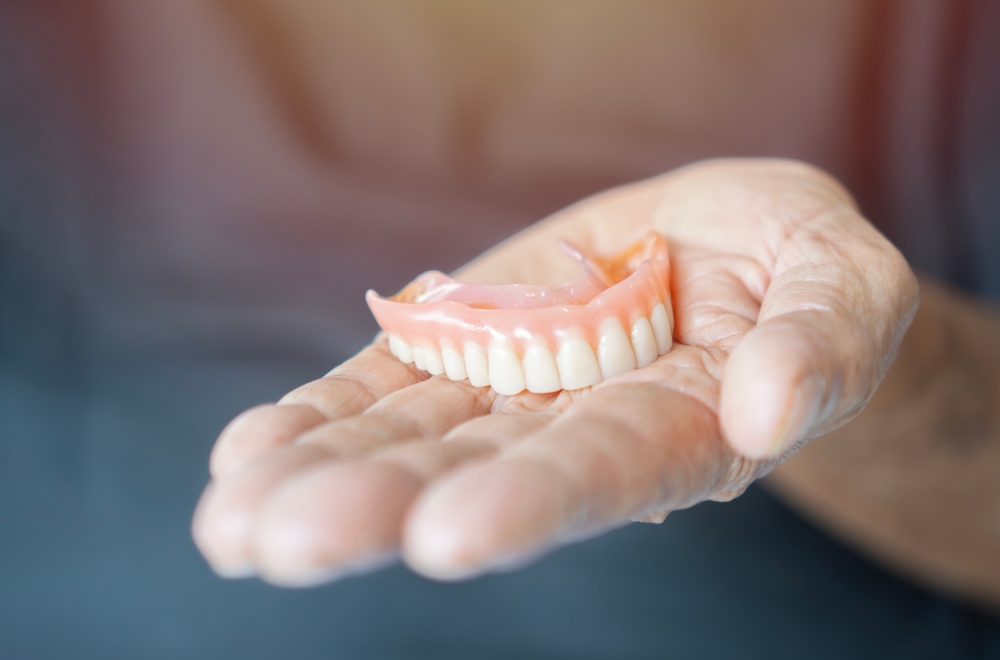
Losing one or more teeth changes more than your smile. It affects how you chew, speak, and feel about showing your teeth in photos. Dentures are, at their simplest, a set of teeth: a removable or fixed prosthetic device built to replace some or all of the natural teeth in an arch. The concept isn’t new. Etruscan practitioners were binding replacement teeth with gold bands as far back as the 7th century BC, though the goal hasn’t changed: restore the ability to eat, speak, and smile without a full set of natural teeth.

Dr. Khizer Hafeez, DDS, and the team at North County Aesthetics & Implants work with patients across San Marcos, Rancho Bernardo, and Escondido to match each person with the right option, whether that’s a conventional partial denture, a full arch replacement, or an implant-supported denture anchored directly to the jawbone.
Request Appointment

Meet the Doctors at North County Aesthetics & Implants

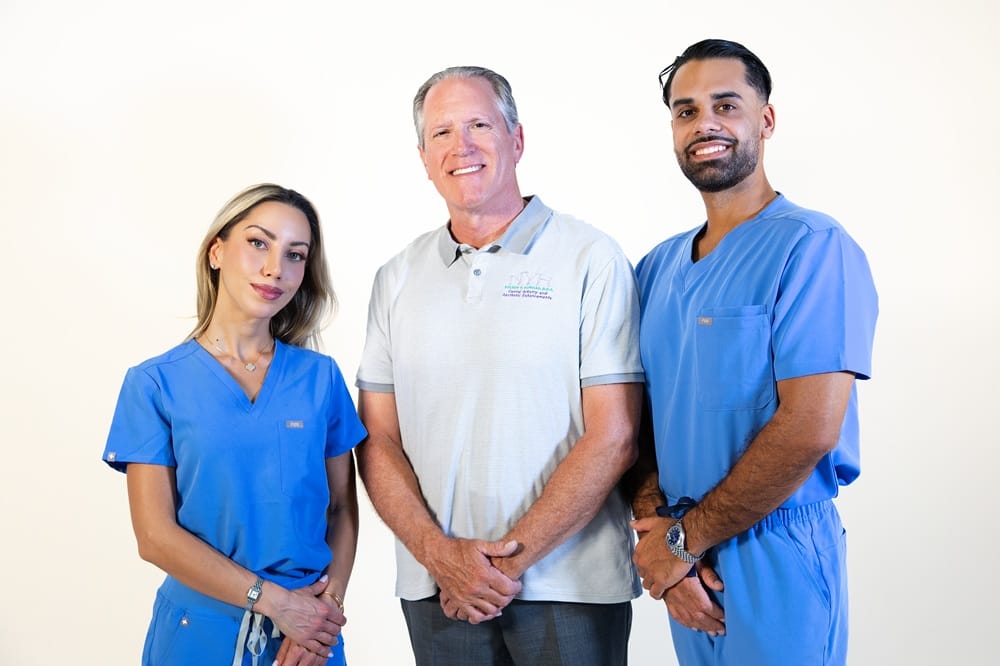
The team at North County Aesthetics & Implants brings together decades of clinical experience and advanced training across cosmetic, restorative, and implant dentistry. Dr. Nelson Y. Howard founded the practice in 1992 and has spent more than 40 years in dentistry, earning accreditation from the American Academy of Cosmetic Dentistry and accumulating over 2,000 hours of continuing education. He’s also a founding member of the West Coast Society for Cosmetic Dentistry and completed a General Practice Residency at the V.A. Medical Center in West Los Angeles. 

Dr. Khizer Hafeez earned his Doctor of Dental Surgery from New York University College of Dentistry and has received national and international awards for cardiovascular disease research. Dr. Dariyan Ayazi rounds out the team, contributing to the practice’s focus on evidence-based, patient-centered care across all treatment types, including dentures, implant-supported dentures, and full mouth reconstruction.

Learn About Your Doctor!

North County Aesthetics & Implants

Conditions and Symptoms Associated with Tooth Loss

Tooth loss significant enough to require dentures most commonly results from advanced periodontal disease, severe decay, traumatic injury, or long-term neglect of oral health. Patients in these situations often report difficulty chewing, changes in speech, shifting of remaining teeth, and visible changes in facial structure as bone loss progresses.

Complete tooth loss is far from rare among older adults: according to the CDC’s 2024 Oral Health Surveillance Report on edentulism prevalence by age, prevalence rises from about 1.2% of adults 35–49 to nearly 20% of adults 75 and older. Dentures address these problems by replacing missing teeth with a removable or fixed prosthetic, restoring both function and appearance.

Recognizing the Problem

Many patients live with significant tooth loss for months or years before seeking professional evaluation, often because the changes happen gradually enough that they become normalized. Jaw soreness after meals, avoiding certain foods entirely, noticing that an existing partial no longer sits flush against the gumline, or seeing visible bone changes in the mirror are all signs that the situation has progressed beyond what conservative management can address. 

An NIH ClinicalTrials.gov protocol on bone resorption timing after tooth loss notes that the maxilla typically loses ridge width faster than the mandible, with a vertical reduction of roughly 1.5 to 2 millimeters in the first six months alone, a pattern that makes early evaluation important for anyone considering implant-supported dentures or All-on-X systems.

When should you seek a professional?

Timing matters more with tooth loss than with many other dental concerns because the window for certain restorative options narrows as bone volume decreases. The same ClinicalTrials.gov protocol on post-extraction bone resorption confirms that resorption begins immediately after a tooth is lost and continues progressively, meaning bone availability for an implant is highest closest to the time of loss. 

If you’ve lost one or more teeth, notice that existing dentures no longer fit properly, or experience persistent discomfort when chewing or speaking, those are clear indicators that a clinical evaluation is appropriate.

Speak to a Professional!

How We Build Your New Teeth

Prevention and Hygiene Education for Long-Term Oral Health

The conditions that lead to denture need, primarily periodontal disease and advanced decay, are largely preventable with consistent care. Brushing twice daily with fluoride toothpaste, flossing once a day, and attending scheduled cleanings and periodontal therapy appointments significantly reduce the risk of gum disease and decay, which most commonly cause tooth loss in adults.

The ADA’s flossing guidance recommends brushing for two minutes twice a day, plus flossing once daily to clear plaque that brushing alone can’t reach. Patients whose oral health has declined across multiple teeth and tissue sites may be candidates for full mouth reconstruction, which combines restorative procedures to rebuild function and structure throughout the entire mouth rather than addressing one tooth at a time.

Home Approaches Patients Try Before Seeking Care

Before seeking professional evaluation, many patients try at-home approaches to manage tooth loss symptoms or ill-fitting dentures. Over-the-counter denture adhesives are among the most commonly used products, providing temporary stability for loose-fitting prosthetics.

A scoping review on denture adhesive usage rates in the Journal of Prosthetic Dentistry found that roughly 15 to 30 percent of denture wearers regularly use an adhesive, representing more than five million users in the U.S. alone. Patients with partial tooth loss sometimes delay evaluation entirely, assuming that because they still have some natural teeth remaining, they don’t yet need a dental bridge or partial denture.

What the Research Says

Over-the-counter denture adhesives can provide short-term comfort, but they don’t address the underlying causes of poor denture fit, which most commonly include bone resorption and changes in gum tissue over time.

The FDA’s consumer safety guidance on denture adhesives warns that a large amount of adhesive will not fix an underlying fit problem, and that prolonged use of an ill-fitting denture may itself contribute to increased bone loss. Clinical evidence consistently supports professional evaluation and refitting or replacement when fit has deteriorated, rather than continued reliance on adhesives or at-home repair methods.

Cost and Insurance for Dentures

The cost of dentures varies by prosthetic type, the number of teeth replaced, and whether implant support is involved. Implant-supported dentures and All-on-X systems cost more upfront than conventional removable dentures but may reduce long-term expenses for refitting, adhesives, and bone loss management.

Most dental insurance plans include some coverage for dentures, which can meaningfully reduce out-of-pocket expenses for eligible patients. Visit our payment options page for details on financing and accepted plans.

Industry Average Pricing for Dentures

Knowing what dentures typically cost helps patients ask more informed questions during a consultation and plan accordingly. According to the 2024 Synchrony/ASQ360° national denture cost study, a full set of conventional, removable dentures averages about $1,968 nationally, with a typical range of roughly $1,520 to $3,648. Low-cost full dentures average closer to $452, while premium, fully customized dentures average around $6,514.

These figures represent national industry averages only and do not reflect pricing at our practice. Contact our team directly to discuss your treatment plan and verify current rates.

Common Insurance Providers That Cover Dentures

Many major dental insurance carriers include denture coverage as part of their basic or major restorative benefits. Mordor Intelligence’s U.S. Dental Insurance Market report names Delta Dental, MetLife, Cigna, Aetna, and UnitedHealthcare as some of the largest dental insurance carriers operating nationally as of 2025.

This list is a general industry overview and doesn’t guarantee it reflects the insurance plans we accept, so contact our team directly to confirm which plans are currently accepted.

Speak to a Professional!

FAQs

How much are dentures?

Denture costs vary widely by type, ranging from around $452 for a basic set to over $6,500 for premium, fully customized dentures. Implant-supported dentures cost more upfront but may reduce long-term expenses tied to adjustments and adhesives. Your exact cost depends on your specific case, so a consultation is the best way to get an accurate estimate.

How to care for dentures?

Rinse and brush your dentures daily with a soft-bristled brush and a non-abrasive cleaner to remove plaque and food debris. Soak them overnight in water or a denture-cleaning solution to prevent drying out or warping. Continue brushing your gums and any remaining natural teeth daily to protect your overall oral health.

What are dentures made of?

Most modern dentures use acrylic resin for the base, with durable acrylic or porcelain for the artificial teeth. Some partial dentures use a metal framework, typically cobalt-chromium, for added strength and a thinner, more comfortable fit. The right material depends on your bite, budget, and how much support your remaining teeth and bone can provide.

Can you eat with dentures?

Yes, though it takes some adjustment, especially in the first few weeks as you get used to the new fit. Start with softer foods cut into small pieces to make the transition easier, then work back up to a fuller diet. Implant-supported dentures generally offer stronger chewing function than conventional removable dentures once you’ve adjusted.

How long do dentures last?

Most dentures last five to ten years with proper care, though this depends on how well they’re maintained and how much your jawbone and gums change over time. Since bone and gum tissue shift gradually, even a well-made denture may need relining or replacement before it breaks. Regular checkups help catch fit changes early, before they cause discomfort or further bone loss.

Let’s Build a Plan Around You

There’s no single right denture for everyone, which is exactly why we don’t treat it that way. Dr. Khizer Hafeez and the team at North County Aesthetics & Implants take the time to understand your bite, your budget, and what matters most to you before recommending a path forward. Reach our San Marcos office at 760.330.8146 or our Rancho Bernardo office at 858.758.4860, or contact us online to set up a consultation.

Request Appointment
San Marcos
Rancho Bernardo