Dental Bridges

Losing a tooth changes more than your smile. It changes how you chew, speak, and feel about showing your teeth in photos. At North County Aesthetics & Implants, Dr. Khizer Hafeez, DDS, and the restorative dentistry team see this concern often, and a dental bridge is one of the most reliable ways to close that gap. A dental bridge is a fixed dental restoration that replaces one or more missing teeth by anchoring an artificial tooth to the natural teeth or implant crowns on either side of the space. According to the American Dental Association’s MouthHealthy resource, “a bridge replaces missing teeth with artificial teeth and literally ‘bridges’ the gap” left behind.

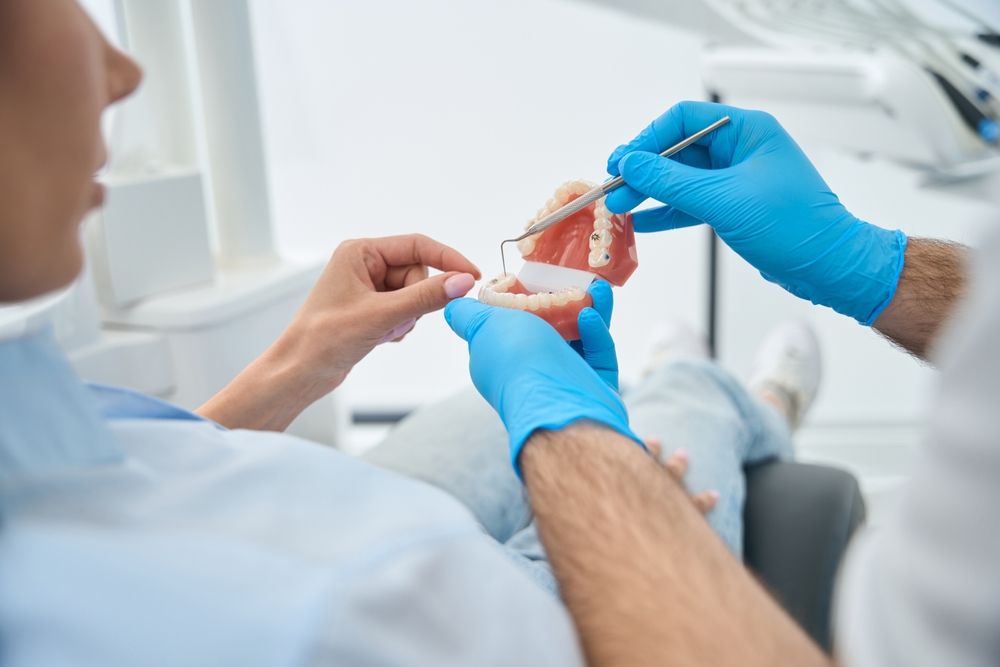
The two supporting teeth, called abutments, hold crowns that anchor the false tooth, or pontic, in between them, and a bridge can attach to your natural teeth or to dental implants depending on your bone health and how many teeth need replacing. For adults dealing with tooth loss from decay, infection, trauma, or extraction, understanding how a bridge works and what it restores helps clarify whether this fixed prosthetic is the right direction for your smile.
Request Appointment

Meet the Doctors

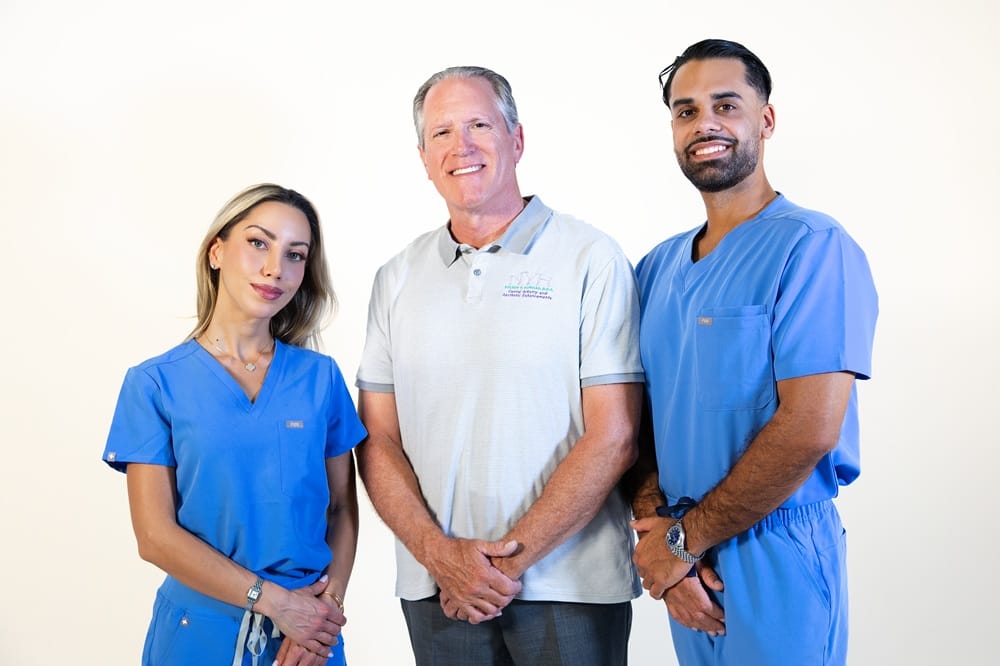
The team at North County Aesthetics & Implants brings decades of combined clinical experience to restorative dentistry, including dental bridge treatment. Dr. Nelson Y. Howard, DDS, founded the practice in 1992 and is accredited by the American Academy of Cosmetic Dentistry, with over 2,000 hours of continuing education and a General Practice Residency completed at the V.A. Medical Center in West Los Angeles. 

Dr. Khizer Hafeez, DDS, graduated from New York University College of Dentistry and brings an extensive background in evidence-based research, including internationally recognized work in cardiovascular disease research, which informs his diagnostic and treatment approach. Dr. Dariyan Ayazi, DDS, rounds out a team committed to precision restorative care, with each provider contributing to a practice philosophy grounded in diagnostic accuracy and long-term patient outcomes.

Learn About Your Doctor!

North County Aesthetics & Implants

Conditions and Symptoms Associated with Tooth Loss

Missing teeth affect far more than appearance. When you lose a tooth, the surrounding teeth no longer have the structural boundary they rely on to stay in position. Over weeks and months, neighboring teeth can tilt or drift toward the open space, changing how the upper and lower teeth meet. That shift changes how force is distributed across the remaining teeth during chewing, which can accelerate wear on specific surfaces and place uneven pressure on the jaw joint, sometimes contributing to the kind of jaw pain treated through TMJ and TMD care.

Below the gumline, the bone that once surrounded the tooth root begins to resorb because the stimulation that kept it dense is no longer present. A dental bridge addresses the visible gap and restores chewing function, and the crowns that anchor it help stabilize the teeth on either side of the space. CDC survey data on tooth loss among older adults found that about 13% of adults aged 65 and older had lost all of their natural teeth in 2015–2018, with the rate rising to roughly 18% among adults 75 and older.

Recognizing the Problem

The changes that follow tooth loss tend to develop quietly. A gap that causes no immediate pain can still allow neighboring teeth to shift enough over time to affect your bite, create new spaces where food becomes trapped, or make certain chewing motions feel off or uncomfortable. Some patients notice that a tooth that was previously stable starts to feel slightly loose, or that their bite closes differently than it used to. Others observe visible movement in a tooth adjacent to a gap they’ve had for a year or more.

These aren’t isolated cosmetic concerns. A peer-reviewed study on tooth movement following posterior tooth loss found that teeth next to an extraction site can tip and rotate measurably compared with teeth in patients who hadn’t lost a tooth, which is exactly the kind of change a clinician checks for at an evaluation.

When should you seek a professional?

The timing of a restorative evaluation after tooth loss matters clinically. Bone changes begin within weeks of a tooth extraction, and the longer adjacent teeth are left without a neighboring structure to contact, the more they can shift from their original positions. Clinical research on post-extraction bone healing indicates that most ridge dimensional change happens within the first 8 to 12 weeks, with roughly two-thirds of horizontal bone loss occurring in the first three months.

Patients who delay evaluation often find that the conditions for straightforward bridge placement have changed, requiring additional steps before a restoration can be placed. If you have an existing gap, have recently had a tooth extracted, or notice that teeth near a missing tooth feel different than they used to, an evaluation gives you an accurate picture of what has changed and what options are still available. A smile consultation or full mouth reconstruction assessment can determine whether a dental bridge, an implant bridge, or a combination of restorative approaches fits your current oral health status.

Speak to a Professional!

How We Place Your Bridge

Prevention and Hygiene for Long-Term Bridge Longevity

Most tooth loss in adults isn’t sudden or unpredictable. Gum disease and untreated decay are the leading causes, and both develop over time in ways that routine professional care can detect and interrupt before they reach the point of extraction. Periodontal therapy and dental cleanings remove the bacterial buildup that drives gum disease, and regular dental checkups allow clinicians to identify structural problems while they’re still manageable.

For patients who already have a dental bridge, the same principles apply with added emphasis on the supporting teeth. The abutment teeth that anchor the bridge carry the restoration’s load, and their long-term health directly determines how long the bridge remains stable. The CDC’s guidance on preventing gum disease recommends brushing twice daily and flossing every day to remove plaque, along with a dental checkup at least once a year, or more often if a provider recommends it.

Home Approaches Patients Try Before Seeking Care

Before scheduling a professional evaluation, many adults manage tooth pain or discomfort around a gap using approaches available without a prescription. Over-the-counter pain relievers such as ibuprofen and acetaminophen are the most common, used to reduce inflammation or blunt localized discomfort. Saltwater rinses are widely recommended in general wellness publications for soothing irritated gum tissue.

Clove oil applied directly to the gum near a painful tooth is another frequently mentioned approach, based on the numbing properties of eugenol, the active compound in clove. A peer-reviewed survey on dental pain and self-care practices found that more than a quarter of respondents had experienced dental pain in the prior six months, and that nearly half of those in pain turned to over-the-counter medication before seeking professional treatment.

What the Research Says

Home remedies can temporarily reduce discomfort, but they don’t address the structural or biological changes that occur when a tooth is missing. Eugenol does have documented topical anesthetic properties, and some formulations are used in clinical settings, but applying clove oil at home doesn’t treat infection, halt bone resorption, or prevent neighboring teeth from shifting. 

A systematic review of plant-based dental pain remedies found moderate-certainty evidence that eugenol is consistently effective for pain linked to pulp inflammation and oral surgery, while noting that the underlying studies test it as a short-term measure, not a replacement for treatment. The clinical literature consistently shows that home-based approaches delay treatment without changing the underlying condition. A sudden or worsening toothache is a better fit for an emergency dentistry visit than for another round of home remedies.

Investing in Your Smile: Cost and Coverage

The cost of a dental bridge depends on the number of teeth being replaced, the materials selected, and the specific clinical conditions of the case. For patients comparing restorative options, knowing the general cost range and how insurance typically applies to bridge treatment helps frame the financial side of the decision before the clinical evaluation.

Industry Average Pricing for Dental Bridges

Delta Dental’s published cost data for out-of-network bridge treatment puts the average cost of a traditional three-unit bridge (two crowns plus a pontic, replacing one missing tooth) at approximately $3,600, with the final price varying by materials, geographic region, and plan coverage.

If an abutment tooth needs a root canal or a new crown before the bridge can be placed, that adds to the total cost. These figures represent industry-wide averages and don’t reflect pricing at any specific practice, so contact the team directly to discuss what applies to your situation and what your plan may cover.

Common Insurance Providers That May Cover Dental Bridges

Dental insurance plans commonly classify bridges as a major restorative service, which typically means coverage applies after a waiting period and at a percentage of the allowed benefit, often 50 percent after the deductible. 

A 2025 industry report on the U.S. dental insurance market identifies Delta Dental, MetLife, Cigna, Aetna, and UnitedHealthcare as major national providers. However, specific coverage terms vary significantly by plan type and employer group. Visit our payment options page for financing details, or contact the team to confirm which plans are accepted before scheduling treatment.

Speak to a Professional!

FAQs

How much does a dental bridge cost?

A traditional three-unit dental bridge typically costs between $2,500 and $6,000, depending on the materials used and the number of teeth being replaced. Implant-supported bridges cost more because they involve surgery to place the implant post. Contact our team for a personalized estimate based on your specific case and insurance coverage.

Is a dental bridge permanent?

A traditional dental bridge is considered a fixed restoration, meaning it’s cemented in place and can only be removed by a dentist. It isn’t meant to come out for daily cleaning the way a removable denture would. With proper care, a fixed bridge can function as a long-term, permanent solution for years.

How long after dental bridge can I eat hot food?

Most patients can eat once the numbness from any local anesthesia wears off, usually within a few hours of your appointment. It’s best to avoid very hot or very cold foods for the first day while the cement fully sets and any sensitivity settles. After that initial period, you can return to your normal diet, including hot foods and drinks.

How long does a dental bridge last?

With consistent oral hygiene and regular professional care, a dental bridge can remain functional for 10 to 15 years or longer. The longevity of the restoration depends heavily on the ongoing health of the supporting teeth and the surrounding gum tissue. Decay or gum disease affecting the abutment teeth is the most common reason a bridge requires replacement sooner.

Can a dental bridge be removed and recemented?

Yes, a dentist can remove a bridge that has come loose or needs adjustment and recement it, provided the abutment teeth and the bridge itself are still in good condition. This is a common repair when cement washes out over time or a bridge shifts slightly. If the supporting teeth have decayed or the bridge is damaged, a replacement may be recommended instead of recementing.

Let’s Find the Right Bridge for Your Smile

A missing tooth doesn’t have to wait until it turns into a bigger problem. The sooner Dr. Khizer Hafeez examines the gap, the more restorative options you’ll have. Reach North County Aesthetics & Implants in San Marcos at 760.330.8146 or in Rancho Bernardo at 858.758.4860, or schedule online.

Request Appointment
San Marcos
Rancho Bernardo