
Each tool was selected to address a specific limitation of traditional dentistry, whether that’s the discomfort of putty impressions, the guesswork in 2D X-rays, or the wait for a lab-fabricated crown. Here’s what each one does and what it changes for the patient.
Advanced Dental Technology
The Technology

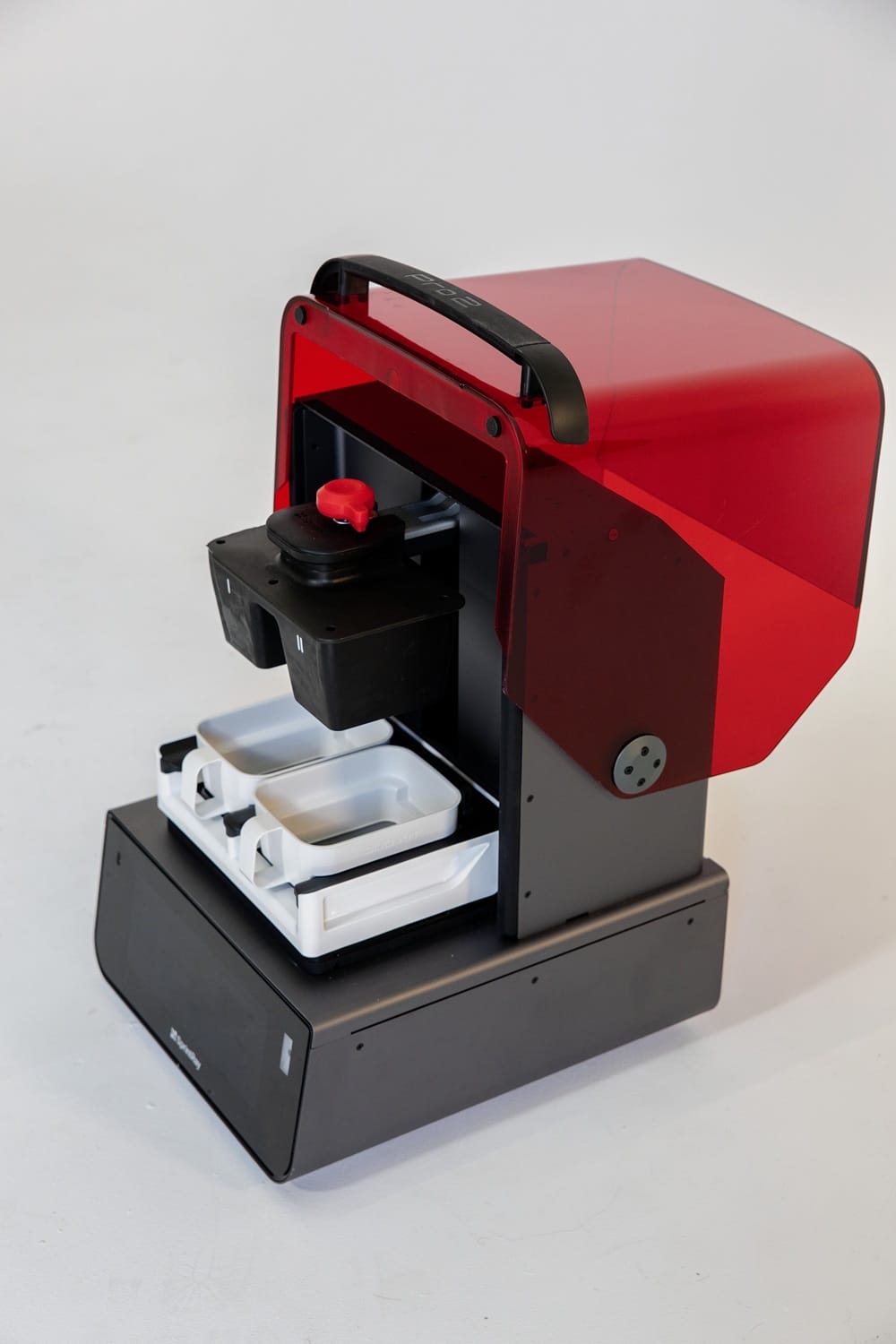
SprintRay Pro 2S
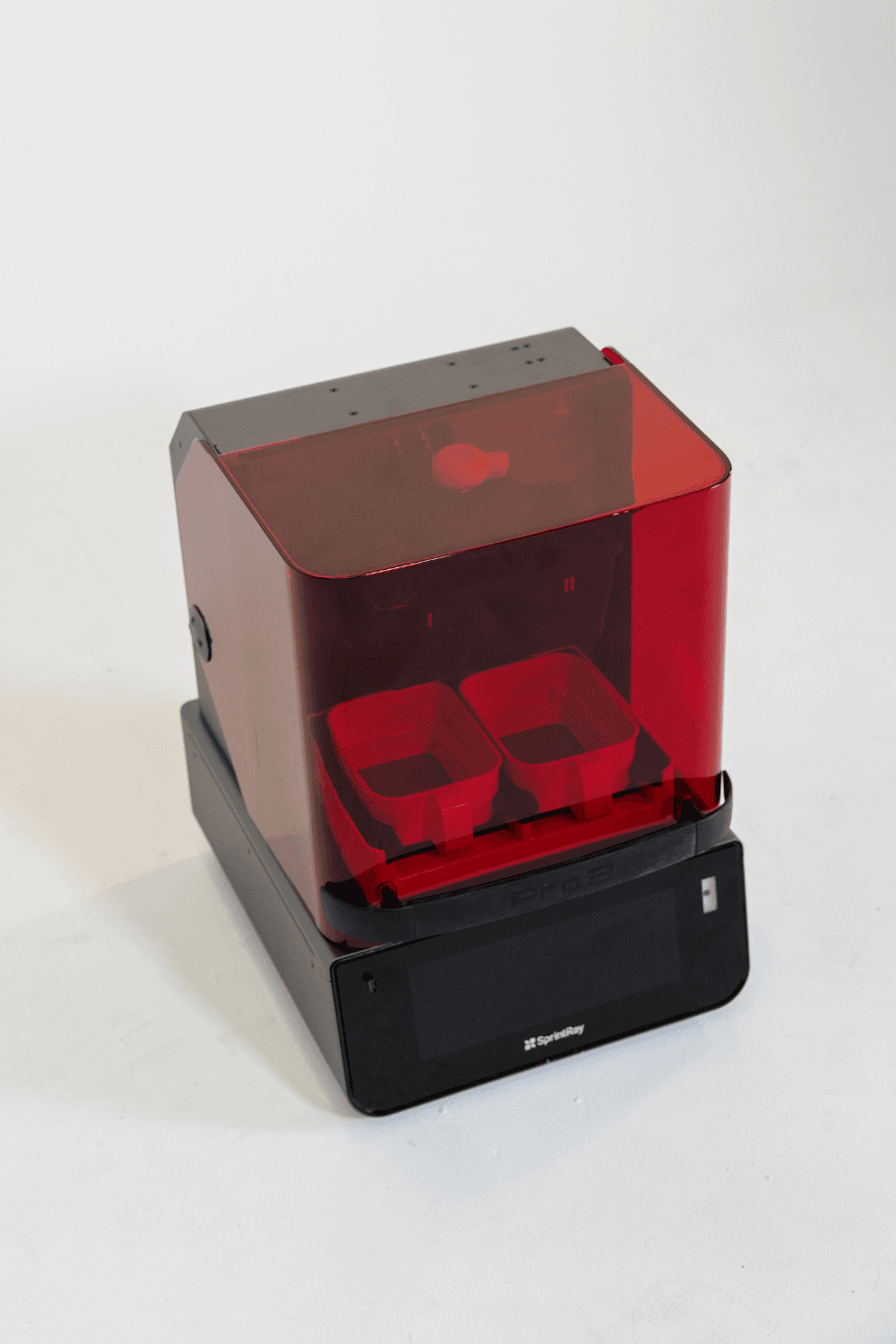
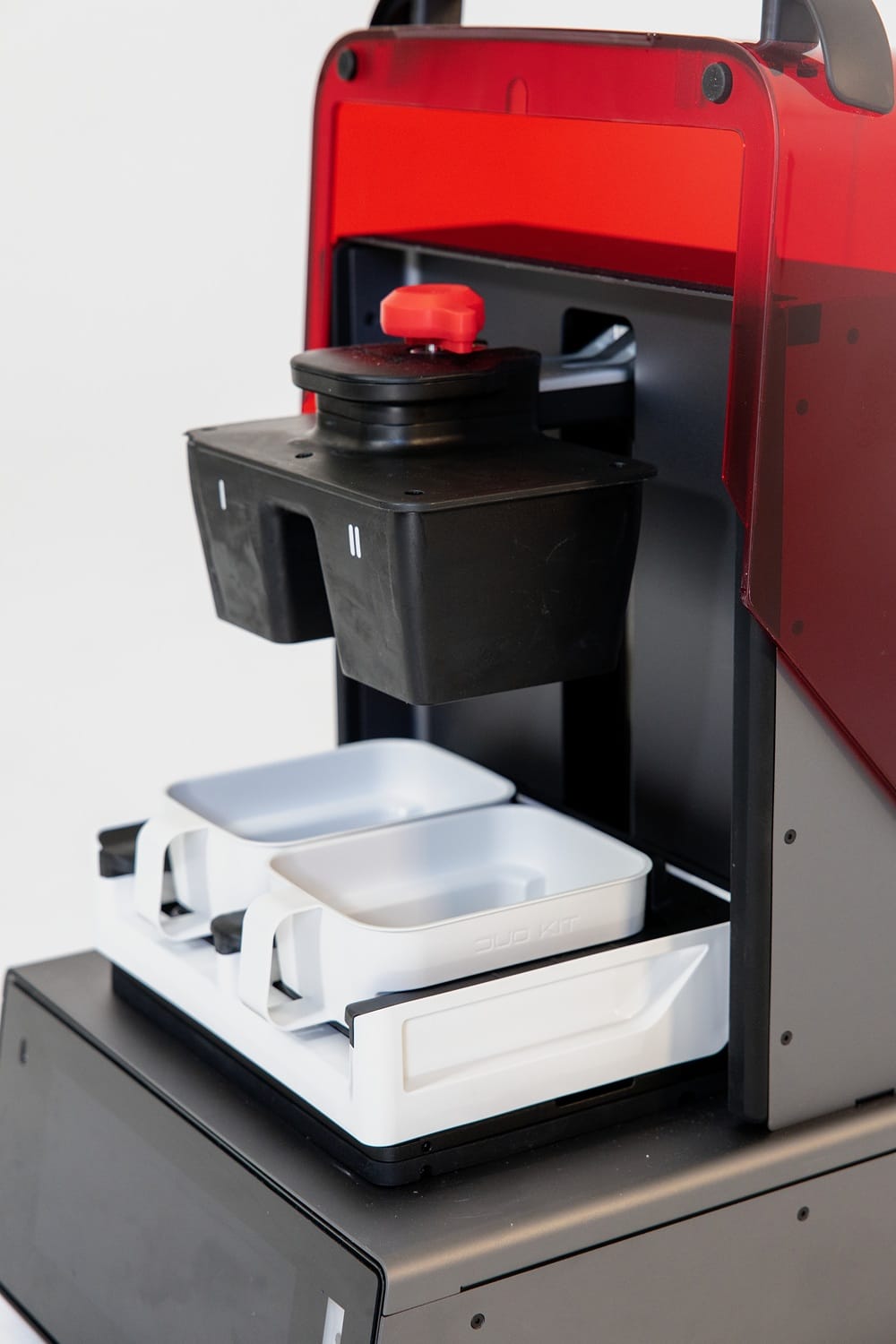
The SprintRay Pro 2S is a professional-grade dental 3D printer that produces restorations, surgical guides, and prosthetic components directly in the office. For patients, the most immediate effect is speed. Components that would otherwise be outsourced to a dental lab and returned days or weeks later can be printed and ready the same day.
For multi-implant cases like All-on-X or 3 on 6, the Pro 2S plays a bigger role. These procedures involve prosthetic components that have to fit precisely against multiple implant positions simultaneously. In-house printing makes it possible to produce and test those components quickly, make adjustments without sending anything out, and move through the fabrication process on a faster timeline than traditional lab workflows allow.
The Pro 2S is also used for 3D printed veneers, temporary restorations during longer treatment plans, and custom surgical guides that help with implant placement accuracy.
SprintRay Midas
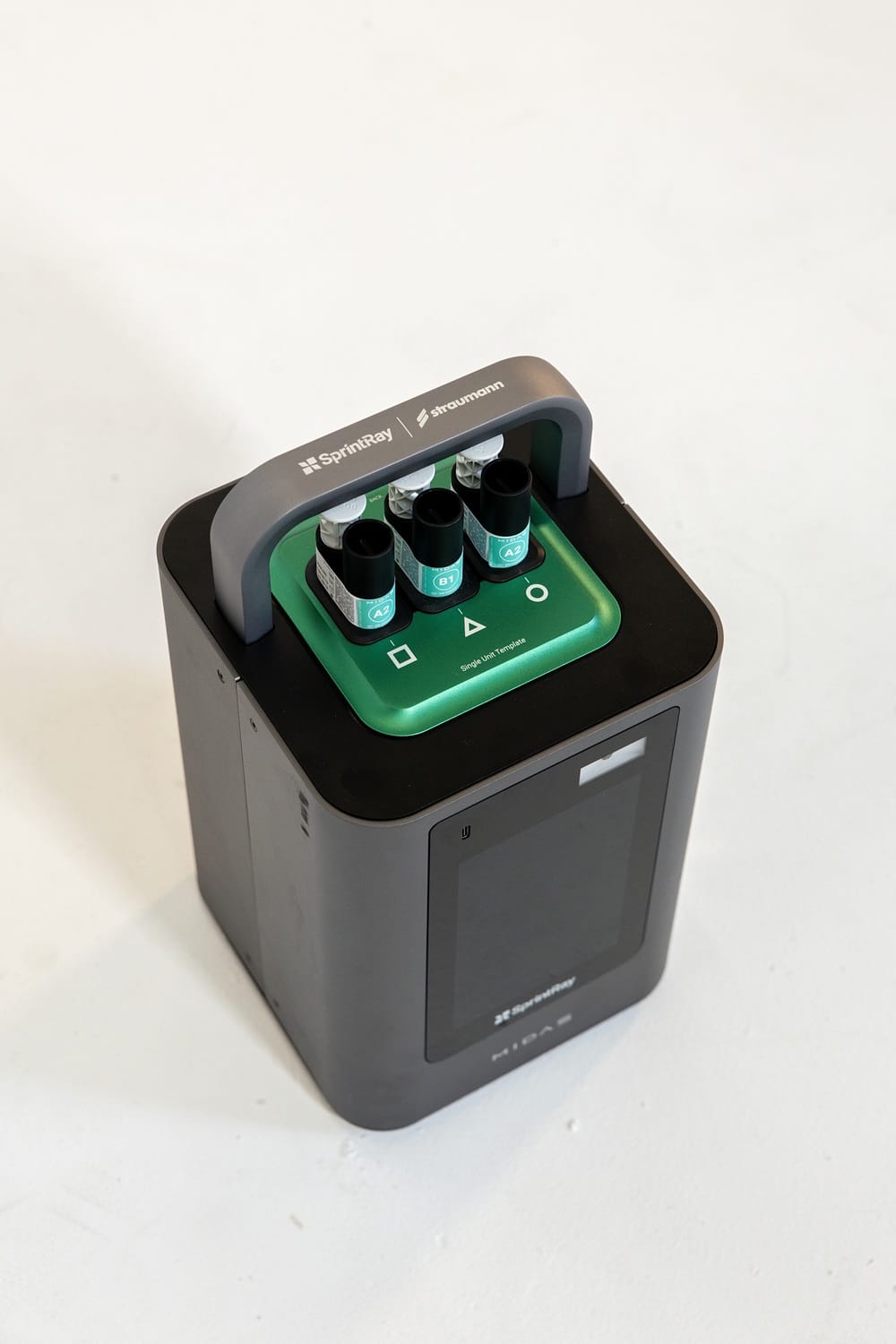
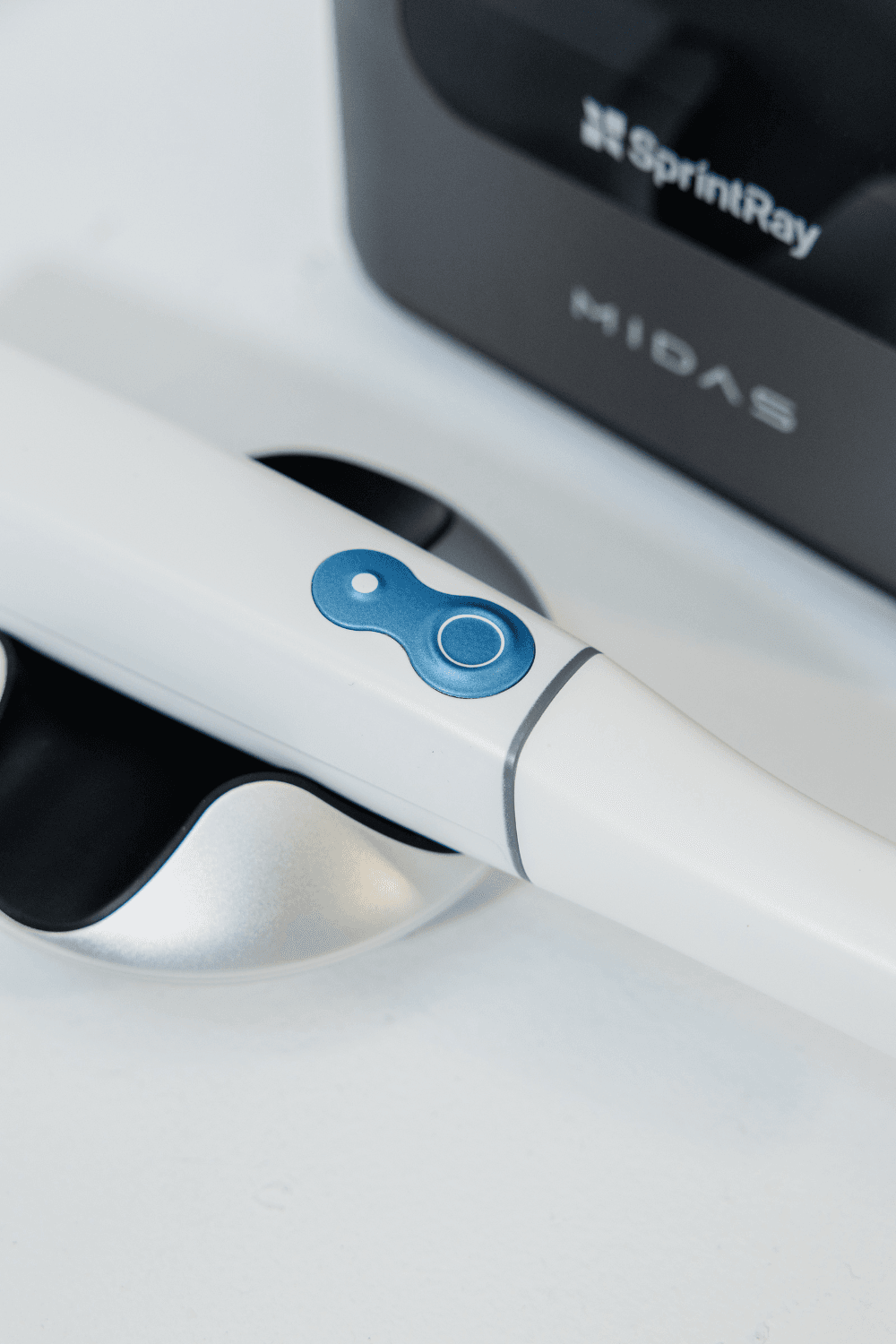
SprintRay Midas is a chairside pressing system that produces a finished porcelain crown during the same appointment in which the tooth is prepared. The tooth is scanned, the crown is designed, and Midas presses it using a ceramic material. No temporary crown, no return visit, no waiting.
Traditionally, getting a crown meant two appointments separated by a week or two. The tooth was prepared and fitted with a temporary crown on the first visit, an impression was sent to a lab, and the permanent crown came back for a second appointment. That process works, but it asks more of the patient’s time and introduces more variables into the fit and finish.
With Midas, the entire process happens in one visit. The scan from the Trios 6 feeds directly into the design, Midas presses the crown from that design, and it’s placed the same day. For patients with busy schedules or anyone who’s had a temporary crown come loose before the permanent one was ready, that’s a meaningful improvement.
Dexis OP 3D
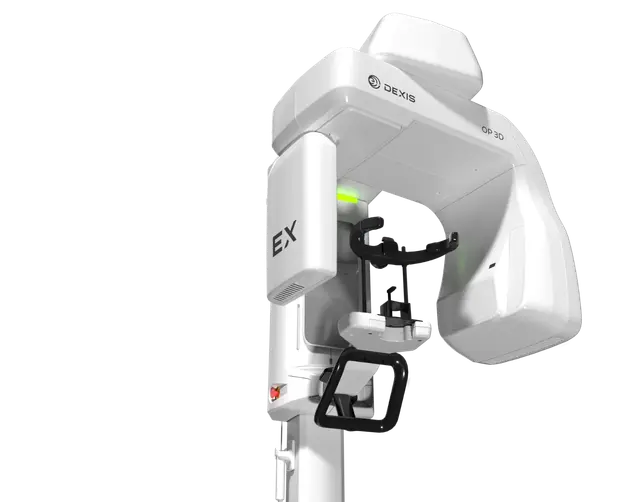
Standard dental X-rays are two-dimensional. They’re useful for catching decay and checking spacing, but they don’t show bone depth, nerve pathways, sinus anatomy, or the three-dimensional relationship between a planned implant and the structures surrounding it. For complex cases, that gap in information matters.
The Dexis OP 3D is a cone beam CT system that produces a full three-dimensional image of the jaw, teeth, bone, and surrounding anatomy in a single scan. Before an implant is placed, the position, angle, and depth can be planned precisely against a complete picture of the bone rather than estimated from a flat image.
This matters most for implant placement, implant bridge planning, and cases involving bone loss or unusual anatomy. It’s also used when a standard X-ray raises a question that a 2D image can’t answer: bone loss around an existing implant, a fracture below the gum line, or irregularities in the jaw structure that would affect how a full mouth reconstruction is staged.
Trios 6
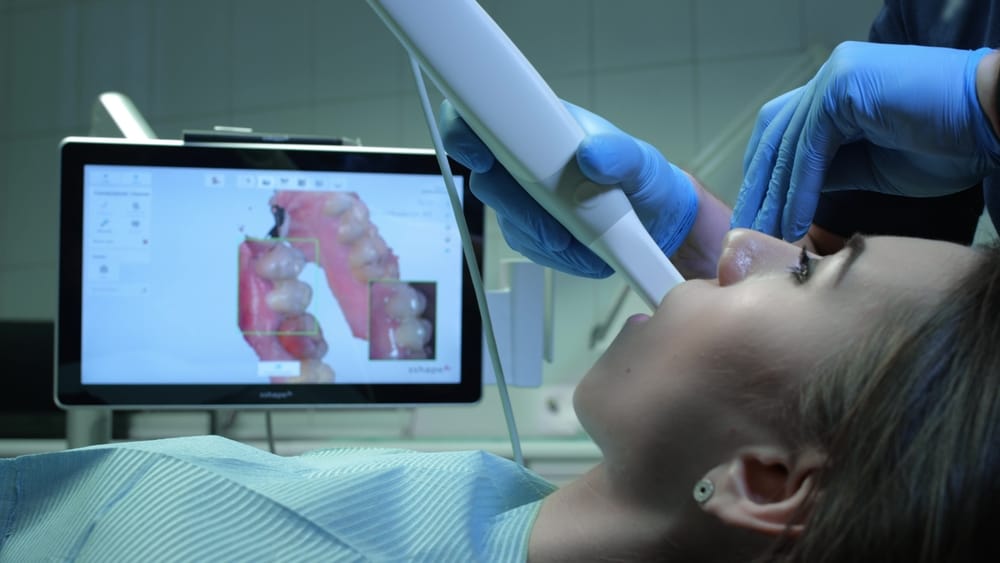
The Trios 6 is an intraoral scanner that builds a precise 3D model of the teeth and surrounding tissue in real time. Instead of a tray of impression material that needs to set, harden, and get mailed to a lab, a small wand moves through the mouth for a few minutes and produces a digital file accurate enough to design a crown, veneer, or aligner from directly.
For patients, this means no gagging, no waiting for material to set, and no risk of the impression distorting in transit. For the restoration itself, it means the fit is based on an exact digital replica of the tooth rather than a physical mold that was handled, shipped, and poured before anyone started designing anything.
The Trios 6 is used at the start of virtually every restorative case at this practice, including crowns, veneers, implant crowns, implant-supported dentures, and full mouth reconstruction.
SprintRay NanoCure
3D printed dental restorations, whether a veneer, a crown, or a prosthetic component, require a curing step after fabrication to reach their full material strength. SprintRay NanoCure is a post-processing system designed to complete that curing as thoroughly as the material allows, maximizing hardness, wear resistance, and long-term durability.
The practical effect for the patient is that a restoration cured through NanoCure holds up better under the forces of everyday chewing and lasts longer than the same material cured through a less controlled process. For printed veneers and implant components specifically, where the restoration is expected to perform for years, the quality of the cure has a direct effect on how long the result holds.
How Technology Makes Our Dentistry Better
- Improved Communication with Intraoral Cameras
- Quicker, More Comfortable Dental Laser Treatments
- Early Cavity Detection Using Infrared Light Technology

Soft Tissue Laser Dentistry
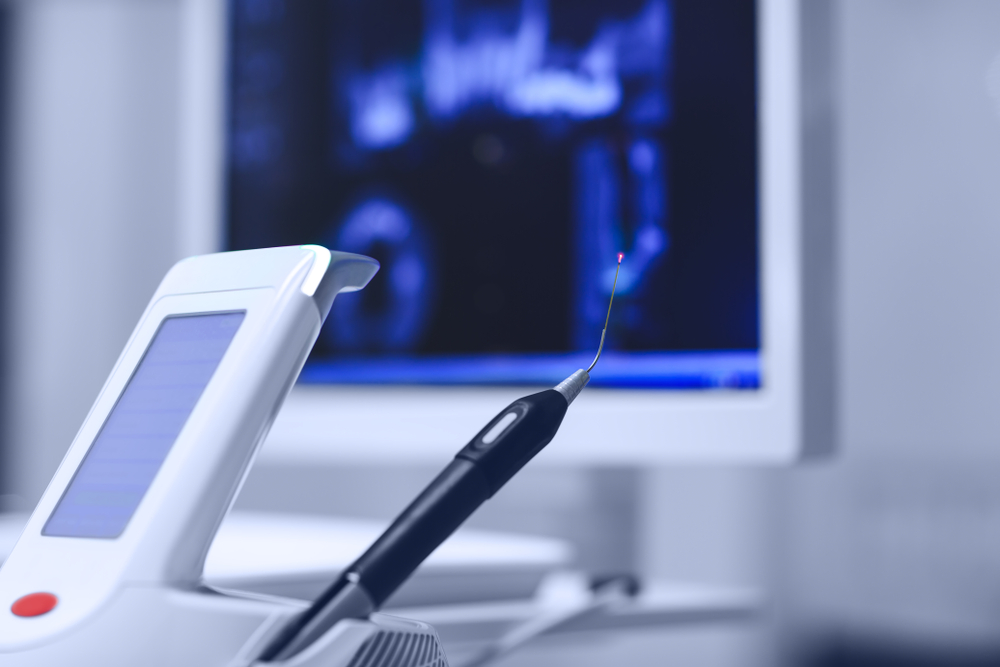
Diode laser therapy has quite a few dental applications, and each one provides a painless, anxiety-free alternative to traditional treatments that use metal dental instruments. Lasers can eliminate harmful oral bacteria, reshape your gum line, and remove an over-restrictive frenulum. If you’re nervous about undergoing a certain procedure, talk to our team to see if laser dentistry could make your experience a more pleasant one.
Digital Impressions
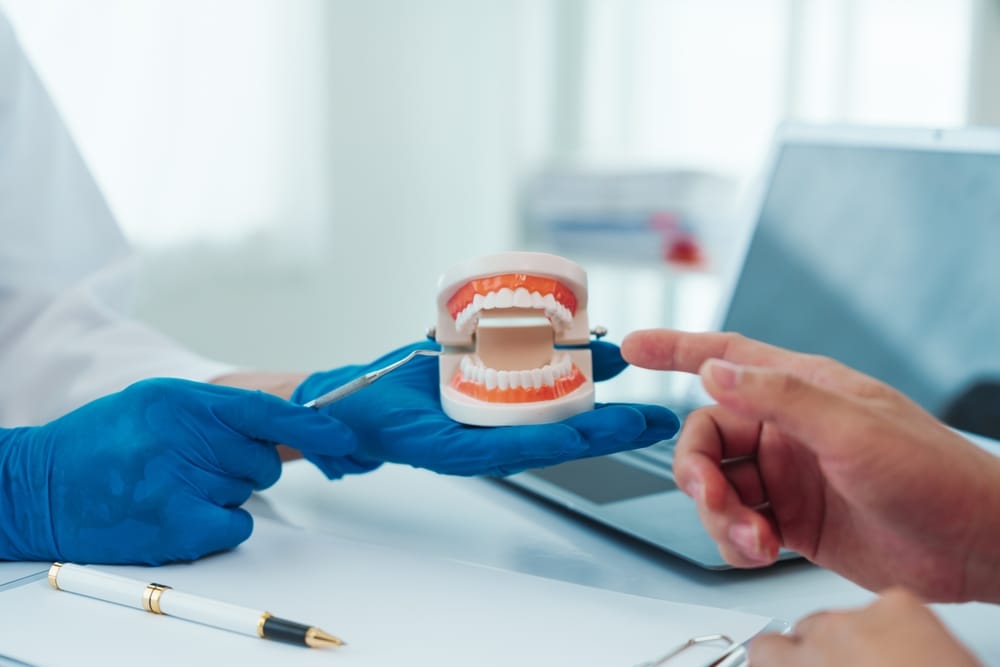
Putty dental impressions are a technique of the past. For a more comfortable and precise patient experience, our team utilizes our state-of-the-art Trios 6 digital scanner to capture 3D, photorealistic impressions that we can immediately send to our dental laboratory or 3D printer. Thanks to this technology, your appointments just got shorter and there’s less room for error while crafting your restorations and oral appliances!
See the Difference Modern Dental Technology Makes
Not all dental offices are the same. The quality of the care you receive depends on whether or not your dentist has been diligent in keeping up with the latest advancements in dental technology and techniques. Dr. Hafeez and Dr. Ayazi are always updating themselves on the most recent changes in dentistry so that they can provide the highest quality care possible for patients. Before you schedule an appointment, take the time to learn the difference that the advanced dental technology we use at our San Marcos and Rancho Bernardo dental office can make.
Digital Cavity Detection
Our Trios 6 oral scanner utilizes infrared technology to detect even the earliest signs of dental decay. It allows us to treat the small symptoms before they have a chance to progress, which could lead to dental sensitivity and even tooth loss. With proactive interventions and early treatment, we’re able to provide minimally invasive solutions to keeping your oral health on the right track, such as fluoride treatment and tooth-colored fillings.
3D Printer
Our Sprintray 3D printers allow us to make each of your visits more streamlined, so you will spend less time in the treatment chair. With them, we’re able to custom-craft oral appliances, mock-ups, and other types of resources in-office. This eliminates the middleman of a dental laboratory and makes sure that your dental implant guides or oral appliances will never leave sight of our skilled team.
Most dental offices still send impressions to an off-site lab and book you for a return visit two weeks later. The tools used here were chosen to change that. From the first digital scan to a finished, fully cured restoration, more of the work happens in this office, in far less time, with a level of precision that traditional workflows have a hard time matching. For a crown, a veneer, or an implant case, that’s the difference between one appointment and four.
Each piece of technology here solves a specific problem in how dental work is planned, made, and finished. Together they form an end-to-end digital workflow that covers diagnosis, design, fabrication, and material curing without the delays and handoffs that traditional lab-dependent processes require.
Meet Dr. Khizer Hafeez
Dr. Khizer Hafeez is a Doctor of Dental Surgery, having earned his degree from the prestigious New York University College of Dentistry. Licensed by the Dental Board of California, Dr. Hafeez brings advanced expertise across a broad range of disciplines, including dental implantology, restorative dentistry, cosmetic dentistry, and general dentistry. He is dedicated to combining clinical precision with a personalized, patient-first approach to help each individual achieve a healthy, confident smile.
How the Tools Work Together
The tools here aren’t five separate pieces of equipment that get pulled out for different procedures. They’re connected steps in a workflow that runs from diagnosis to finished restoration without the delays and handoffs that come with traditional lab-dependent dentistry.
From First Scan to Same-Day Crown
For a crown case, the workflow looks like this: the Trios 6 captures a precise digital scan of the prepared tooth. That scan becomes the design file. SprintRay Midas presses the crown from that design during the same appointment. SprintRay NanoCure completes the curing to full material strength. The patient leaves the same day with a finished restoration.
No putty impression. No temporary crown. No second visit. The conventional two-appointment crown process happens in one sitting because every step in that chain takes place in the office with tools that talk to each other.
For Implant Cases, the Picture Is More Complete
Implant cases add the Dexis OP 3D to the front of the workflow. Before any surgery, the 3D scan maps bone volume, bone density, nerve positions, and sinus anatomy in detail. That information drives the implant placement plan. For cases involving multiple implants, including All-on-X, 3 on 6, implant bridges, and implant-supported dentures, the SprintRay Pro 2S produces the prosthetic components in-house, which means faster fabrication and the ability to adjust without waiting on a lab.
The result across both types of cases is the same: fewer appointments, less uncertainty between steps, and restorations built from precise data rather than physical approximations.
Who Benefits Most From This Setup
Not every procedure puts all five tools to work, but for patients pursuing certain treatments the integrated digital workflow makes a real difference in how the process goes and how the result holds up.
Patients Getting Crowns, Veneers, or Same-Day Restorations
If the goal is to get in and out with a finished restoration rather than managing a temporary for two weeks, the combination of the Trios 6, SprintRay Midas, and SprintRay NanoCure makes same-day treatment possible for a wide range of cases. Crowns and veneers that would have taken multiple appointments can now be completed in one, with the same material quality that lab-fabricated restorations offer.
Implant Patients and Full Mouth Reconstruction Cases
For anyone pursuing dental implants, All-on-X, a 3 on 6 restoration, or a full mouth reconstruction, the Dexis OP 3D and SprintRay Pro 2S have the biggest impact. Detailed 3D imaging before placement reduces the guesswork in surgical planning. In-house printing of prosthetic components and surgical guides speeds up fabrication and makes adjustments easier to handle without extended delays.
These are typically the longer, more involved treatment plans, and a fully integrated digital workflow helps them move faster and with more predictability than traditional methods allow.
Frequently Asked Questions About Dental Technology
Does Digital Scanning With the Trios 6 Work for All Types of Restorations?
The Trios 6 is used for virtually all restorative cases at this practice, including crowns, veneers, implant crowns, implant-supported dentures, bridges, and full mouth reconstruction planning. The digital scan replaces traditional impressions in most cases, though the specific workflow varies depending on what’s being made.
How Is Same-Day Crown Fabrication With SprintRay Midas Different From a CEREC Crown?
Both are chairside systems that produce a crown during the same appointment. SprintRay Midas uses a pressing process with ceramic material rather than milling, which some clinicians find produces a more natural-looking result with fewer surface adjustments needed after fabrication. The key outcome for the patient is the same: a finished crown in a single visit.
Why Does Cone Beam 3D Imaging Matter More for Implants Than for Other Procedures?
Placing an implant requires knowing the exact depth, density, and dimensions of the available bone, as well as the location of nerves and sinus cavities that can’t be seen in a standard X-ray. Missing that information or estimating it from a 2D image introduces risk into placement. The Dexis OP 3D eliminates that guesswork by producing a complete three-dimensional picture of the surgical site before the procedure starts.
Can the SprintRay Pro 2S Produce Components for Complex Implant Cases Like All-on-X?
Yes. The Pro 2S is capable of producing the prosthetic components used in multi-implant workflows including All-on-X and 3 on 6 cases. Printing those components in-house reduces turnaround time and makes it easier to adjust the fit without sending anything to an external lab.
What Does SprintRay NanoCure Actually Change About How a Restoration Holds Up?
The NanoCure system completes the post-fabrication curing of 3D printed restorations more thoroughly than standard curing methods. The result is a harder, more wear-resistant material surface, which matters most for restorations that will be under regular chewing forces for years. Veneers and implant crowns in particular benefit from the added material strength.
Is This Technology Used for Cosmetic Cases as Well as Restorative Ones?
Yes. The Trios 6 scanner and SprintRay systems are used across both cosmetic and restorative work. 3D printed veneers, smile design planning, and cosmetic crown work all run through the same digital workflow. The precision that makes the technology valuable for a complex implant case is the same precision that makes it useful for a veneer that needs to match the surrounding teeth exactly.