
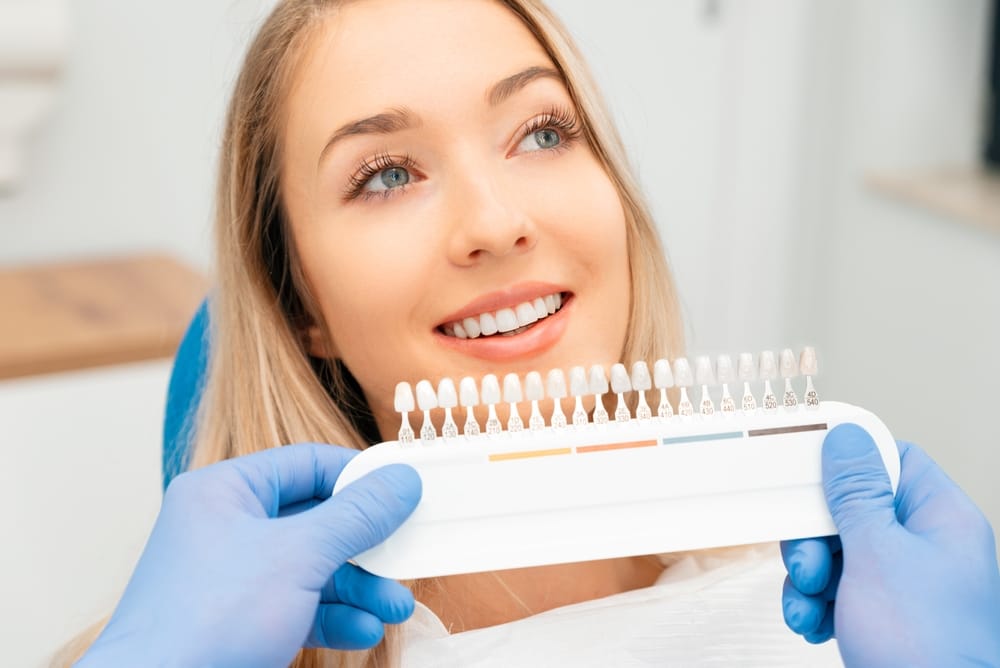
There’s usually a story behind a veneers Rancho Bernardo consultation. It’s either a stubborn stain whitening won’t touch, a chip that’s lingered too long, or a smile that just doesn’t match how they want to look. Custom-made, tooth-colored shells bond to the front surface of each tooth, correcting discolored front teeth, tooth discoloration, and bite irregularities without the invasiveness of more aggressive dental procedures. North County Aesthetics & Implants evaluates every case individually, using digital scanning and in-office fabrication technology to make sure the result fits the patient, not just the textbook.
Veneers Rancho Bernardo
Meet the Doctors
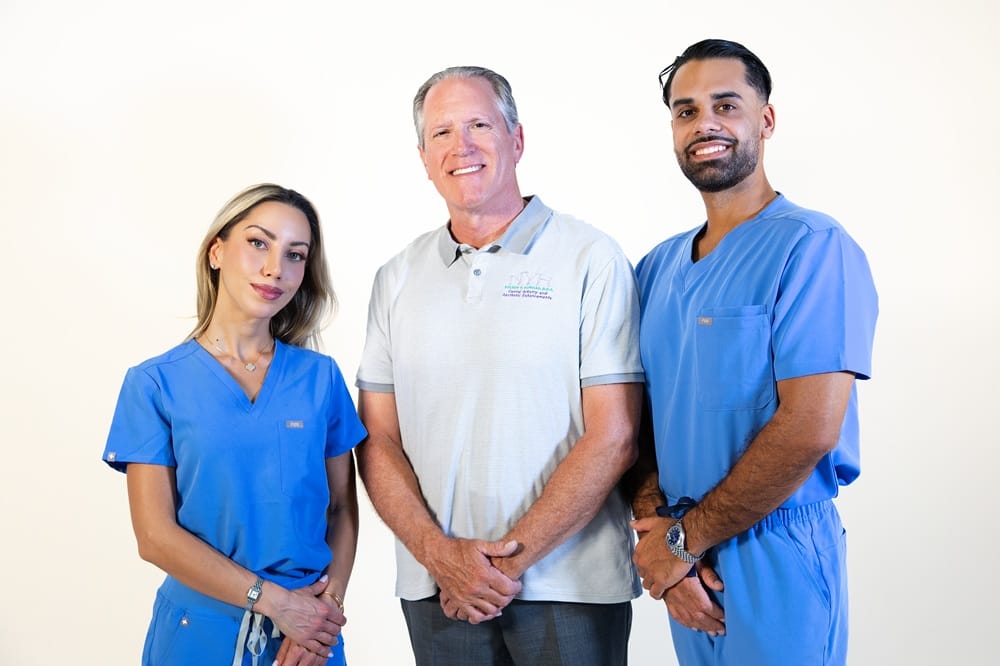
Dr. Nelson Y. Howard founded this practice in 1992 and has spent more than 40 years focused on cosmetic and restorative dentistry at a level most general practices don’t attempt. He’s an accredited member of the American Academy of Cosmetic Dentistry and a founding member of the West Coast Society for Cosmetic Dentistry. He has completed over 2,000 hours of continuing education, including a one-year General Practice Residency at the V.A. Medical Center in West Los Angeles.
Dr. Khizer Hafeez, DDS, graduated from New York University College of Dentistry and brings an internationally recognized research background in medicine that directly informs the evidence-based approach the practice applies to every cosmetic case. Dr. Dariyan Ayazi, DDS, contributes to a care model that prioritizes diagnostic accuracy and predictable outcomes over volume-driven treatment.

Are you experiencing tooth discoloration, chips, or an uneven smile?
Is getting veneers right for you?
Not every cosmetic concern calls for the same solution. Before committing to any treatment, ask honest questions about what you’re experiencing, what you want to change, and whether your overall oral health supports the process.
Types of Veneers Available at North County Aesthetics & Implants
Traditional Porcelain Veneers
Research consistently supports porcelain veneers as a durable cosmetic option with high patient satisfaction rates. Survival studies have reported that a significant percentage of porcelain veneers remain intact at the 10-year mark, with some tracking positive outcomes beyond 15 years. The primary argument against them centers on enamel removal. Once that enamel is gone, the tooth will always require some form of restoration. For well-selected candidates, the durability and aesthetic outcome tend to outweigh this concern, but the irreversible nature of the preparation is a legitimate factor in the decision and is worth discussing directly with your provider.
This durability isn’t anecdotal. A 2021 systematic review covering 6,500 porcelain laminate veneers across 25 clinical studies found that “the 10-year estimated cumulative survival rate (CSR) of PLVs was 95.5%,” according to a 95.5% 10-year survival rate for porcelain veneers, even after accounting for fracture, debonding, and secondary decay as separate failure points. That level of long-term evidence is hard to find elsewhere in cosmetic dentistry, which is why traditional porcelain remains the benchmark other options are measured against, enamel removal notwithstanding.
Prepless and 3D Printed Veneers
The appeal of prepless veneers is straightforward: no enamel removal, no permanent alteration to the tooth. The limitation is that they aren’t appropriate for every case. Teeth with significant discoloration, large chips, or existing bulk may not be good candidates because adding material without removing any can result in a restoration that appears or feels too thick. For 3D-printed veneers, the material science is still developing relative to the decades of clinical data behind traditional porcelain. They perform well in appropriate cases, but long-term survival data continues to accumulate, and case selection remains critical to success.
Early data on the no-prep approach are promising but less mature. A 7-year prospective study of 80 no-preparation composite laminate veneers, placed mainly for diastemas, wedge-shaped defects, and reshaping, found that “the overall survival rate was 91.3%,” according to 91.3% survival rate for no-prep veneers over 7 years. That’s a strong result, though it reflects a smaller body of research than traditional porcelain, and outcomes still hinge heavily on which patients are selected for the technique.
What to Expect During Your Veneers Treatment
Initial Consultation and Oral Health Check
Your treatment begins with a conversation, not a chart review. Dr. Khizer Hafeez or another member of our dental team asks about your concerns, examines your natural teeth, and checks for gum disease or tooth decay that needs attention first. Veneers work best on a healthy foundation, so this step matters as much as the cosmetic planning that follows. We also discuss which type of veneer fits your goals and budget.
Impressions of Your Teeth and Digital Design
Once we’ve confirmed you’re a good candidate, we capture impressions of your teeth using the Trios 6 intraoral scanner, which produces a precise 3D image without the mess of traditional molds. That scan becomes the foundation for your digital design, where we map out shape, size, and color matching before we cut or print any material. You’ll see a preview of the design before we move forward, so there are no surprises later.
Custom-Made Shells, Crafted for Your Smile
With your design finalized, we fabricate your custom-made shells, often right here in the office using SprintRay 3D printing technology. Traditional porcelain veneers may be sent for additional finishing, while prepless and 3D printed options are typically ready sooner. Either path is built around your specific teeth, not a generic mold. We check every shell against your original scan before it ever touches your mouth.
Bonding Your Veneers to the Front Surface
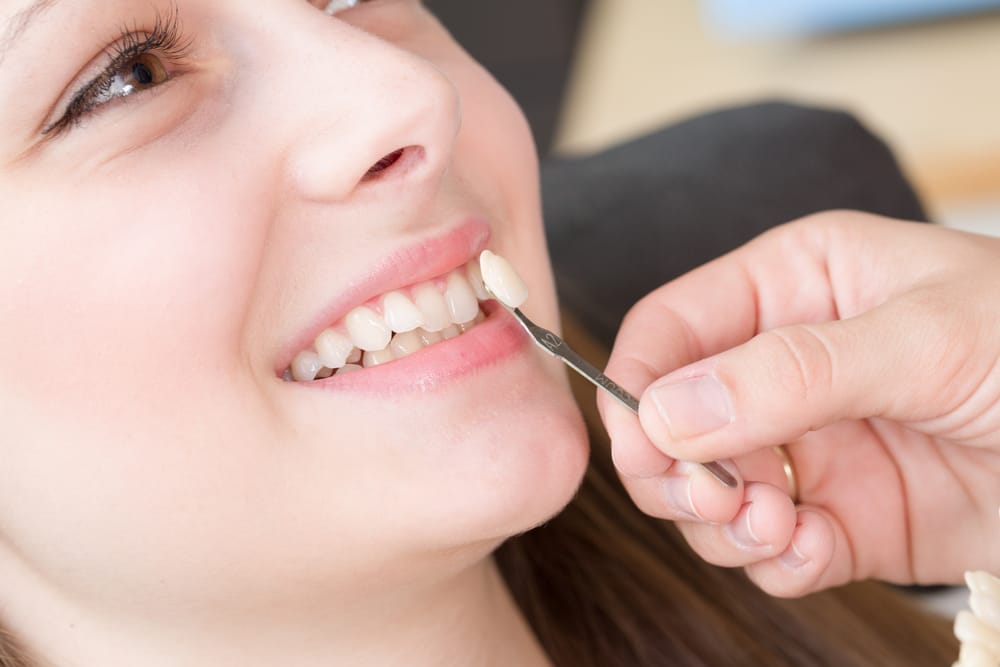
This is the step where your new smile actually takes shape. We bond your veneers to the front surface of each prepared tooth, checking fit, color, and comfort at every stage before final placement. Prepless veneers require no enamel removal, while traditional veneers involve a small amount of preparation beforehand. Once bonding is complete, we make any last adjustments, so your bite feels natural.
Long-Term Care and Scheduled Follow-Up
Getting your veneers placed isn’t the end of the process. We schedule a follow-up visit to check comfort, fit, and how your bite has settled, along with a review of aftercare and maintenance tips specific to your veneer type. Regular brushing and flossing, along with routine dental care visits, keep both your veneers and the natural teeth around them in good shape. Long-term care is what keeps your results looking the way they did on day one.
Alternative Treatments: What happens if you do nothing?
Financial Implications of More Invasive Solutions
Skipping early treatment rarely saves money over time. A small chip that could be addressed with a veneer can develop into a crack that reaches the tooth’s inner structure, at which point a crown becomes necessary instead of a veneer, and the cost increases substantially. If the damage progresses to infection or tooth loss, the path forward involves root canal therapy, extraction, and potentially a dental implant, representing a far larger financial commitment than addressing the problem in its earlier stages.
National cost data compiled from the ADA Survey of Dental Fees, the FAIR Health consumer database, and CMS fee schedules show how sharply prices climb at each stage of escalation: a dental crown averages $800 to $2,500, while replacing a lost tooth with an implant runs $3,760 to $5,733, according to the average cost of a single dental implant. That’s before counting the bone grafting or abutment fees that often accompany implant placement, which a veneer placed early avoids entirely.
Health Implications of More Invasive Solutions
Chipped and cracked teeth create openings where bacteria can enter the tooth structure. Over time, that bacterial infiltration can reach the pulp, the soft tissue at the center of the tooth that contains nerves and blood vessels. Once the pulp is affected, infection can develop, and the options narrow to root canal therapy or extraction.
The connection between neglected oral infections and body-wide health is well documented. A peer-reviewed review archived in the National Library of Medicine’s PMC database notes that “periodontal disease (PD) is common in the US and globally” and outlines how the systemic inflammation such infections trigger is implicated in atherosclerotic cardiovascular disease, according to the link between periodontal disease and cardiovascular disease. An untreated chip that progresses to infection follows a similar inflammatory pathway, giving structural dental problems a health stake that extends well beyond the mouth.
Safety Implications of More Invasive Solutions
A chipped tooth with a sharp or jagged edge poses a direct physical risk to the soft tissues inside your mouth. A broken tooth edge can repeatedly irritate or cut the tongue, cheeks, and lips, leading to sores and potential secondary infection. In cases where a tooth fractures more significantly, there’s also a risk of swallowing or inhaling a tooth fragment, the kind of situation our emergency dentistry team handles when it can’t wait.
Sharp, fractured tooth edges create more than daily irritation. A peer-reviewed clinical review on foreign-body accidents in dentistry notes that although aspiration or ingestion of a tooth fragment is uncommon, “the associated risks and morbidity are too high to be overlooked,” according to risks of tooth fragment aspiration in dentistry. Fragile, damaged edges also raise the odds of a piece breaking free during ordinary chewing, which is why addressing a crack before it worsens removes a real, if rare, safety risk.
FAQs
How long do porcelain veneers last compared to other types?
Traditional porcelain veneers typically last 10 to 20 years with proper care, including avoiding habits like nail biting or chewing on hard objects and wearing a night guard if you grind your teeth. Prepless and 3D printed veneers are newer options with promising early clinical results, though their long-term survival data is still accumulating compared to the decades of research behind traditional porcelain. The type of veneer that will serve you longest depends on your individual case, including how much enamel is present, your bite habits, and the nature of your cosmetic concerns.
What is the difference between a veneer and a crown?
A veneer covers only the front surface of a tooth and requires little to no removal of tooth structure, depending on the type. A crown encases the entire tooth and requires removing significantly more enamel to create room for the restoration. Providers typically recommend crowns when a tooth has extensive decay, damage, or structural compromise. Veneers are better suited for cosmetically focused concerns on teeth that are otherwise healthy and intact. If your tooth has significant structural issues, your provider may recommend a crown even if your primary concern is appearance.
Can veneers address gaps or mild spacing between teeth?
Veneers can improve the appearance of minor gaps between teeth by adjusting the shape and width of the visible tooth surface. They’re not a substitute for orthodontic treatment when spacing is significant or when the underlying bite is affected. For patients with moderate spacing concerns, ClearCorrect clear aligners may be a better starting point, or the two approaches may be combined in sequence. A smile consultation at North County Aesthetics & Implants is the most reliable way to determine which path makes sense for your situation.
What are prepless veneers and who are they best suited for?
Prepless veneers are placed directly on the tooth surface without removing any enamel, which makes them a reversible option unlike traditional veneers. They work best for patients with relatively thin teeth, mild to moderate cosmetic concerns, and no significant existing discoloration or bulk that would make an additive-only approach look unnatural. If your teeth are already on the thicker side or if you have deep staining that shows through the veneer material, prepless veneers may not produce the result you’re looking for. Your provider can evaluate your tooth structure during a consultation to determine whether you’re a good candidate.
Will veneers require changes to my daily dental routine?
Veneers don’t require a dramatically different routine, but a few habits matter for longevity. Regular cleanings and checkups remain important because veneers don’t protect gum tissue or the tooth edges where decay can still develop. Avoid biting very hard foods directly with veneered teeth to reduce the risk of chipping. If you grind your teeth at night, a custom night guard protects the veneers from the pressure that would otherwise wear them down prematurely. Your provider will walk you through the care recommendations based on the type of veneer placed and your individual habits.
Your Veneers Rancho Bernardo Appointment Is One Call Away
A chip, a stain, or an uneven edge doesn’t have to wait until your next cleaning; Veneers Rancho Bernardo patients can get started right away! Call our office at 858.758.4860, or reach out through our contact page to set up a consultation with Dr. Khizer Hafeez. Every step, from your first scan to your finished smile, happens right here under one roof at North County Aesthetics & Implants.