Root Canals

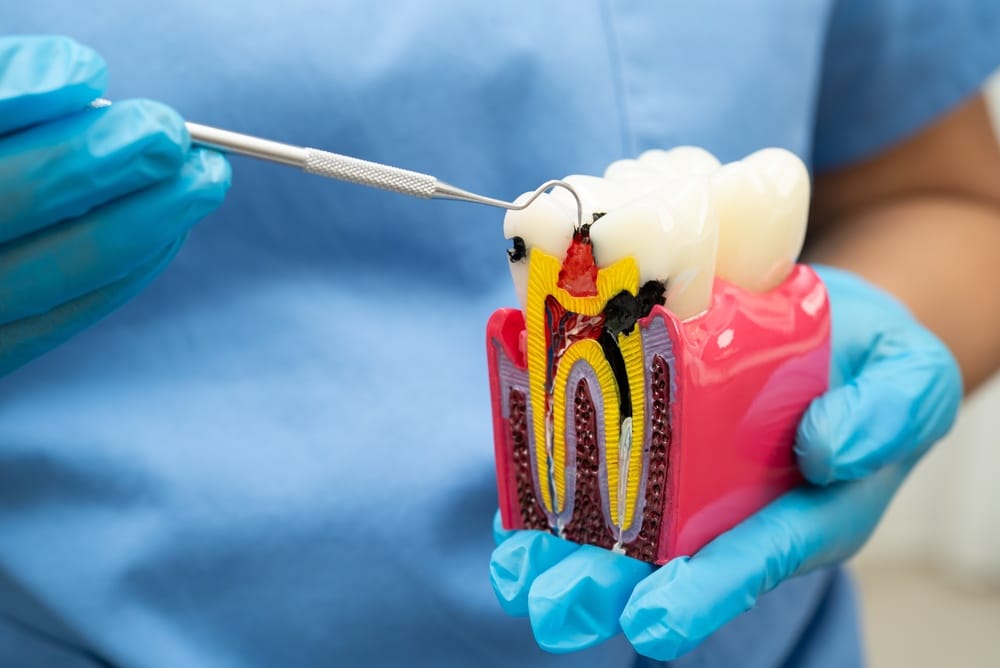
A damaged or infected tooth doesn’t have to mean losing it. Root canal treatment, formally called endodontic therapy, removes infected or inflamed pulp, the soft tissue of nerves and blood vessels inside your tooth, then cleans, shapes, and seals the space left behind. Merriam-Webster defines a root canal as a dental operation that saves a tooth by removing the contents of its root canal and filling the space with a protective material.

Dr. Khizer Hafeez, DDS, and the team at North County Aesthetics & Implants use this procedure to help patients keep their natural tooth instead of losing it to infection. Root canals carry a reputation for being uncomfortable, but modern anesthesia and updated techniques make the procedure far more manageable than most patients expect.


Request Appointment

Meet the Doctors at North County Aesthetics & Implants

The team at North County Aesthetics & Implants brings together decades of clinical experience and a foundation in evidence-based care. Dr. Nelson Y. Howard founded the practice in 1992, holds accreditation from the American Academy of Cosmetic Dentistry, and has completed more than 2,000 hours of continuing education, including a General Practice Residency at the V.A. Medical Center in West Los Angeles. 

Dr. Khizer Hafeez earned his Doctor of Dental Surgery from New York University College of Dentistry and brings an internationally recognized research background, including recognition for cardiovascular disease research, that directly informs his diagnostic and treatment planning approach. Dr. Dariyan Ayazi rounds out the team, contributing to a practice that uses advanced diagnostic tools, including the Trios 6 intraoral scanner, to support accurate evaluation before any restorative procedure.

Learn About Your Doctor!

North County Aesthetics & Implants

Conditions, Symptoms, and Pain Associated with Root Canal Treatment

Root canal treatment becomes necessary when the pulp inside a tooth becomes infected or inflamed beyond what your body can resolve on its own. The most common causes are deep decay reaching the pulp chamber, a cracked tooth, and repeated dental work on the same tooth. This is more common than most people realize.

According to CDC’s national data on untreated tooth decay, roughly one in four adults has at least one untreated decayed tooth at any given time, decay that can progress into the kind of pulp infection root canals treat. Left untreated, that infection spreads to surrounding bone and tissue, putting the tooth itself at risk.

Recognizing the Problem

Not every toothache means you need a root canal, but certain patterns are worth watching closely. The American Association of Endodontists’ clinical diagnostic terminology describes the condition using markers like lingering thermal pain, spontaneous pain, and referred pain: sensitivity that lasts well after the trigger is removed, throbbing without an obvious cause, and pain that seems to come from nowhere.

Other signs include visible swelling, tooth darkening, and tenderness when biting. Some patients with real pulp damage feel very little pain, which is exactly why a tooth that’s stopped hurting still deserves an exam.

When should you seek a professional?

Pulp infections don’t resolve on their own, because the tissue inside a tooth lacks the external blood supply your immune system needs to fight bacteria the way it would elsewhere in your body. The longer you delay evaluation, the more the infection progresses and the fewer treatment options remain. 

NIH’s clinical guidance on dental infections is clear: delayed treatment can worsen the problem and can eventually cost you the tooth. When the infection has advanced too far, extraction followed by replacement with dental implants or dental bridges becomes the path forward. Getting evaluated while the tooth is still restorable keeps your options open and usually means a simpler procedure.

Speak to a Professional!

Inside Our Treatment Process

Prevention and Hygiene Education for Tooth Pulp Health

Deep decay and tooth fracture, the two leading causes of root canals, are largely preventable with consistent hygiene. The American Dental Association’s oral hygiene guidelines call for brushing twice daily with fluoride toothpaste, flossing daily, and limiting sugary foods.

Chewing ice or grinding your teeth at night raises your risk of fractures that let bacteria in, and a custom mouthguard protects against both. Routine dental cleanings also help your dentist catch small problems, including large existing restorations more likely to develop complications, before they reach the pulp.

Popular Home Remedies for Tooth Pain

Many people try something at home before calling their dentist, and that instinct is common. Studies of dental patients report self-treatment rates for toothache ranging from roughly 40% up to nearly all patients surveyed, depending on the population.

Clove oil, valued for its eugenol content, has a long history as a temporary numbing agent. Saltwater rinses and over-the-counter anti-inflammatories like ibuprofen are also popular first responses, mostly because they’re accessible without a dentist visit.

What the Research Says

These remedies can dull pain, but they don’t touch the infection itself. A peer-reviewed systematic review of natural dental pain treatments confirms eugenol’s short-term analgesic value. However, NIH’s toxicology review of eugenol notes there’s no real evidence it treats the underlying condition.

Eugenol can’t reach inside a sealed pulp chamber or clear a canal infection, and saltwater rinses have no mechanism for reaching pulp tissue at all. They’re reasonable to use while you wait for an appointment, but they’re not a substitute.

Cost and Insurance for Endodontic Treatment

Root canal treatment is one of the more commonly covered restorative procedures under dental insurance, and your out-of-pocket cost depends on the tooth involved, canal complexity, and your specific plan.

Industry Average Pricing for Root Canal Procedures

Anterior teeth, which usually have one or two canals, cost less to treat than molars, which have more canals and take longer. National cost research from CareCredit puts the average root canal cost around $1,165, typically ranging from $500 to $1,800 depending on the tooth and location. Most treated teeth also need a crown afterward, which carries its own separate cost. These are industry averages only, so contact our team directly for rates specific to your situation.

Common Insurance Providers for Root Canal Coverage

Root canal treatment usually falls under a plan’s major restorative benefits. Delta Dental’s overview of root canal coverage, one of the largest dental insurance carriers nationally, notes that plans commonly cover 50% to 80% of the cost once the deductible is met. This isn’t a guarantee of coverage at our practice specifically, so verify your plan through our payment options page before your appointment.

Speak to a Professional!

FAQs

How long does a root canal take?

Most root canals take between 60 and 90 minutes, though molars with more canals can take longer than front teeth. Straightforward cases are often finished in a single visit, while more complex infections may need two appointments. Your dentist will give you a time estimate specific to your tooth during your consultation.

How much does a root canal cost?

Root canal costs vary by tooth, with molars generally costing more than front teeth because they have more canals. National averages run from roughly $500 to $1,800 per tooth, not including the crown most patients need afterward. Your exact cost depends on your insurance coverage and the complexity of your case, so our team can provide a personalized estimate.

Do root canals hurt?

The procedure itself is performed under local anesthesia, so most patients feel little to no pain while it’s happening. Any discomfort typically comes from the infection that led to the root canal, not the treatment itself, and many patients feel relief within days. Mild soreness afterward is normal and usually manageable with over-the-counter pain medication.

Can you eat after a root canal?

You can eat once the numbness from your anesthesia fully wears off, usually within a few hours. Stick to soft foods and chew on the opposite side of your mouth until your permanent crown is placed, since the treated tooth is more fragile in the meantime. Avoid hard or sticky foods on that tooth while it heals.

How do you know if you need a root canal?

Signs you may need a root canal include lingering sensitivity to hot or cold, spontaneous throbbing pain, swelling near a specific tooth, or tenderness when biting down. Sometimes a tooth stops hurting even though the pulp has died, so pain relief alone doesn’t mean the problem is resolved. A dental exam and X-ray are the only reliable way to confirm whether you need a root canal.

Two Locations, One Straightforward Fix

Lingering tooth pain rarely gets better on its own, and putting off an exam usually means a longer fix later, not a shorter one. Dr. Khizer Hafeez, DDS, can get you in fast at either our San Marcos office 760.330.8146 or Rancho Bernardo office 858.758.4860. Reach out through our contact page, and our team at North County Aesthetics & Implants will find a time that works before the pain does.

Request Appointment
San Marcos
Rancho Bernardo