
Finding a dentist in San Marcos, CA who handles dental implants, cosmetic dentistry, and restorative dental care under one roof means fewer referrals, fewer delays, and a clearer path to results. Whether you’re dealing with missing teeth, a smile you want to improve, or damaged teeth that need repair, the right dental care starts with a dental practice that has the training and tools to help patients across San Marcos and San Diego.
Dentist in San Marcos, CA
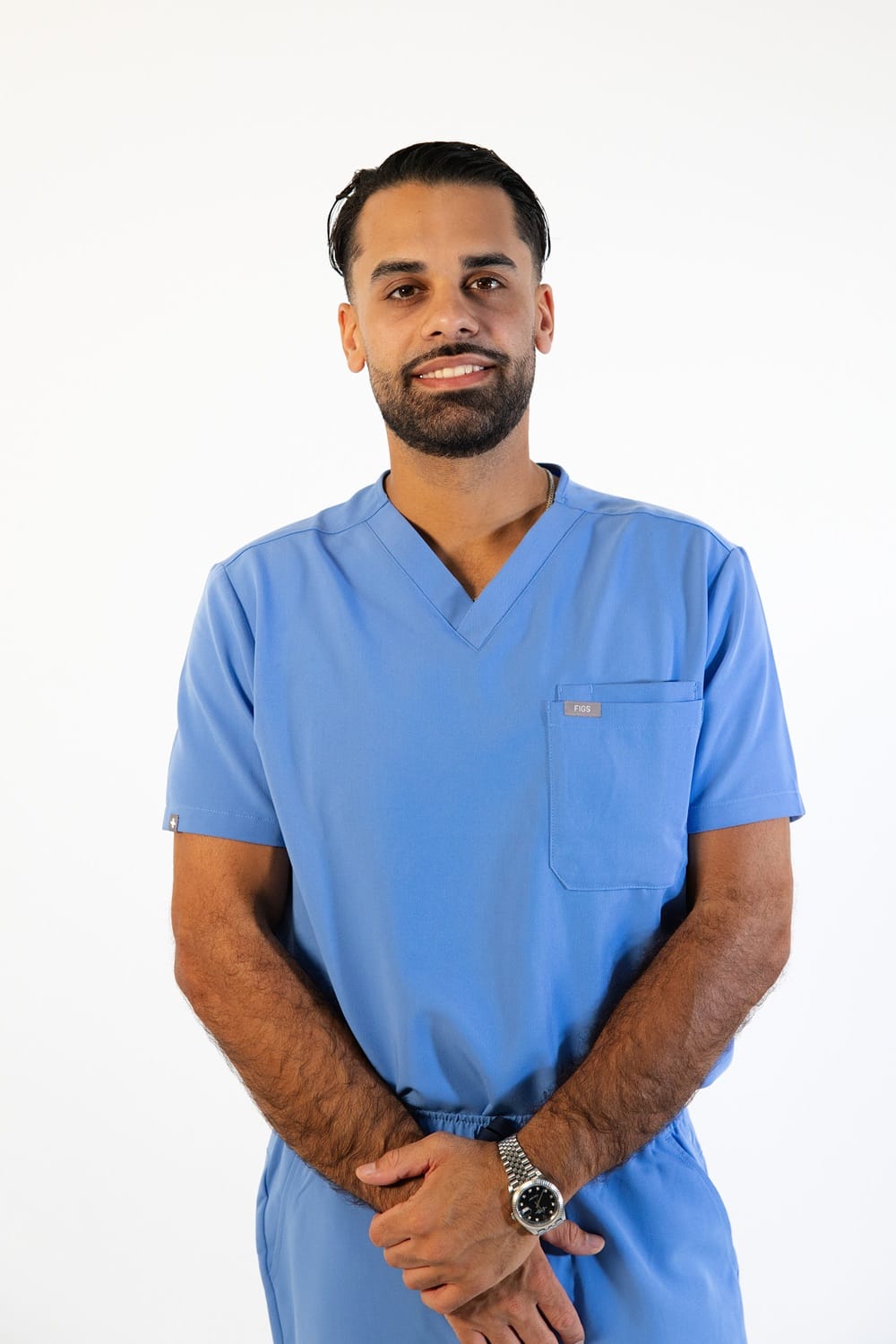
Meet the Doctor
Dr. Khizer Hafeez is a Doctor of Dental Surgery, having earned his degree from the prestigious New York University College of Dentistry. Licensed by the Dental Board of California, Dr. Hafeez brings advanced expertise across a broad range of disciplines, including dental implantology, restorative dentistry, cosmetic dentistry, and general dentistry. He is dedicated to combining clinical precision with a personalized, patient-first approach to help each individual achieve a healthy, confident smile.

Dental Implants
Dental implants are one of the most involved dental solutions we offer, and also one of the most life-changing. The sections below walk through who qualifies, what the process looks like from consultation through guided implant placement, and what happens if treatment gets delayed.
Is dental implant treatment right for you?
Losing a tooth changes more than your smile. It affects how you chew, how you speak, and over time, how your jawbone holds its shape. If you’ve been living with a gap, managing oral pain from a failing tooth, wearing a denture that no longer fits well, or been told a tooth can’t be saved, dental implants may be worth exploring with a san marcos dentist who handles the full process in-office.
Who is a candidate for dental implants?
Dental implants work for patients missing one tooth, several teeth, or all of their teeth. Good candidates have enough bone to support an implant post and no uncontrolled health conditions that could slow healing. Patients considering implant-supported dentures or single implant crowns go through the same thorough evaluation. If bone loss has occurred, additional steps may be needed before placement can begin.
What does the dental implant process involve?
Our team uses the Trios 6 digital scanner and Dexis OP 3D cone beam imaging to map your jaw and support guided implant placement before any surgical decision is made. From there, options including All-on-X, 3 on 6, implant bridges, and single implant crowns are reviewed based on your situation. Immediate implant placement is available in qualifying cases, meaning the implant post can be placed the same day a tooth is removed. Each step is planned and performed in our office.
Where does dental implant treatment fit into your treatment plan?
Most implant cases involve a consultation, imaging, placement, a healing period, and then the final restoration. If a tooth extraction is needed first, that’s handled here. Bone grafting, when required, is also addressed before placement. The implant restoration, whether a crown, bridge, or implant-supported denture, is completed in our office. Patients don’t need to travel between multiple providers for different phases of care.
When is the right time to consider dental implants?
The right time is sooner than most patients expect. Once a tooth is lost, the bone beneath it begins to shrink. Acting early preserves the bone volume needed for a stable implant. Patients who have worn dentures for years may still be candidates, though more evaluation is needed. Implants are designed to last decades with proper care, making them a long-term dental solution rather than a temporary fix.
Why choose dental implants over other tooth replacement options?
Dental bridges require grinding down healthy adjacent teeth to anchor the restoration. Removable dentures shift over time and don’t stop bone loss. Implants are the only tooth replacement option that preserves the jawbone by stimulating it the way a natural tooth root does. Dr. Hafeez’s advanced imaging capabilities mean implant planning is precise and the final result looks and functions like a natural tooth. A PMC study measured this improvement directly, finding that “the overall patient satisfaction score improved significantly” Patients who choose implants report higher satisfaction and better long-term oral health outcomes compared to those who choose dentures or bridges alone.
Waiting on Implant Treatment Leads to Bone Loss That Can’t Be Reversed Without Surgery
When a missing tooth goes unaddressed, the effects build fast. The jawbone in that area begins to shrink within the first year, and nearby teeth gradually shift toward the gap. According to ClinicalTrials.gov, “up to 50% loss of alveolar crestal bone width will likely occur 1 year after tooth loss”. What starts as one missing tooth can become a misalignment problem, a bite issue, and a far more involved treatment plan. Acting before major bone loss occurs protects both your oral health and your long-term costs.
Request an Appointment
Cosmetic Dentistry
Cosmetic dental services cover a wider range than most patients realize, from a single teeth whitening treatment to a full smile design overhaul. The sections below cover who cosmetic dentistry is right for, what the process looks like, and why putting off cosmetic concerns can sometimes grow into a more serious dental problem.
More Can Be Fixed Than Most Patients Expect
Some patients assume every cosmetic option requires permanent changes to the tooth or that only dramatic cases qualify. In reality, treatments like teeth whitening, dental bonding, and prepless veneers address a wide range of concerns without extensive tooth reduction. For patients with spacing issues, invisible aligners or clear aligners may be a useful first step before cosmetic work begins, and orthodontic appliances like these are worth raising during a consultation. A dentist san marcos patients rely on for aesthetic results can walk you through what’s actually possible and in what order it makes sense.
Who is a candidate for cosmetic dentistry?
Cosmetic treatment covers a wide range of starting points. Patients with surface staining, chips, uneven edges, minor gaps, or worn enamel are often candidates for one or more cosmetic options. Teeth whitening works well for generalized discoloration, while dental bonding and veneers address shape and structural irregularities that whitening can’t touch. More involved cases involving multiple teeth or a complete smile makeover are planned during a consultation and worked through in a logical sequence. A short evaluation is usually enough to identify which treatment fits the situation.
What does the cosmetic dentistry process involve?
The process depends on the treatment. Teeth whitening can be completed in a single visit. Dental bonding is chairside and typically requires no tooth reduction. Prepless veneers, which require little to no enamel removal, are designed using the Trios 6 digital scanner and fabricated in-office using SprintRay technology. More involved smile design cases are mapped out during consultation and completed across a planned sequence of visits. Most cosmetic work is done entirely in our office without outside labs.
Where does cosmetic treatment fit into your treatment plan?
Smile consultations are the starting point for any smile design plan. During that visit, teeth are checked for health, bite function, and cosmetic goals before any work begins. If teeth whitening is part of the plan, it’s completed before veneers or bonding are placed so the shade can be matched correctly. Cosmetic treatment generally follows any restorative or periodontal work that needs to happen first, since cosmetic results last longer when they’re built on a healthy foundation.
When is the right time to consider cosmetic dentistry?
Cosmetic dentistry makes sense when surface concerns have reached a point that whitening or basic care can’t address, or when chips and wear are affecting how comfortable you feel about your smile. It’s also worth considering before a major life event when you want a result that lasts rather than a short-term fix. Veneers and bonding placed with proper care can last many years. A consultation clarifies which treatment fits your timeline, your teeth, and your goals.
Why does the level of cosmetic training matter?
Dr. Hafeez brings advanced expertise across a broad range of disciplines, including cosmetic dentistry. According to a published systematic review of 25 clinical studies covering 6,500 porcelain laminate veneers in the Journal of Clinical Medicine, “the 10-year estimated cumulative survival rate of PLVs was 95.5%.” That level of cosmetic precision directly affects the quality of every result.
A Cosmetic Concern Left Unaddressed Can Become a Clinical Problem
A chipped edge that seems minor can fracture further under normal biting pressure. When that happens, bonding or a veneer is no longer enough and a crown becomes necessary instead. Beyond the physical risk, avoiding the dentist because of dissatisfaction with your smile allows decay and gum disease to develop quietly in the background. The NIDCR reports that “nearly 1 in 5 US adults experience moderate to high dental fear and anxiety that can prevent them from seeking needed oral care,” and a Lancet review on the consequences of untreated oral disease found that “the personal consequences of chronic untreated oral diseases are often severe”. By the time those conditions are caught, the original cosmetic concern has grown into a health problem that requires more time and more treatment to address.
Request an Appointment
Restorative Dentistry
Restorative dental procedures range from fixing a single cracked tooth to rebuilding how the entire mouth fits together. The sections below cover who this type of dental care is right for, what the process looks like with same-day technology, and how preventive dentistry and deep cleaning factor into long-term outcomes.
Same-Day Restorations Have Changed What’s Possible in a Single Appointment
A cracked tooth, a lost filling, or years of wear can make eating and speaking uncomfortable. Restorative dentistry covers everything from a single damaged tooth to rebuilding an entire mouth. The technology available today means many of those treatments can be done faster than most patients expect. If you’ve assumed treatment would take weeks of back-and-forth appointments, same-day options at our office may change that thinking.
Who is a candidate for restorative dental treatment?
Restorative treatment fits patients at many different stages. Some need a single crown for a cracked tooth. Others need several crowns and bridges to address years of damage. Patients considering full mouth reconstruction have often dealt with worn, broken, or missing teeth for a long time and want a plan that addresses everything at once. The evaluation looks at the condition of remaining teeth, gum health, and how the upper and lower teeth meet when biting.
What does the restorative dentistry process involve?
Our office uses the SprintRay Pro 2S and SprintRay Midas systems to design, print, and place crowns in a single visit. SprintRay NanoCure sets the final material properties of each printed restoration. The Dexis OP 3D imaging system gives our team a detailed view of roots, bone, and surrounding structures before any work begins. Because fabrication happens in our office, patients leave with their final restoration the same day rather than waiting for an off-site lab.
Where does restorative treatment fit into your treatment plan?
Restorative care connects to many other dental procedures. Root canal therapy, when needed, is completed before a crown is placed over the tooth. Periodontal therapy, including deep cleaning when gum disease is a factor, may come first in a full mouth reconstruction to make sure the gum and bone foundation is stable before new restorations are built on top. Dental bridges are planned around the health of the teeth on either side. Because imaging, treatment, and fabrication all happen in our office, the steps stay coordinated in one place.
When is the right time to consider restorative dentistry?
Act when you notice dental pain, sensitivity, visible cracking, or a restoration that no longer fits right. Waiting past those signs usually means the damage spreads. A crown placed early on a cracked tooth can prevent a fracture that would require extraction. Consistent oral hygiene and preventive dentistry go a long way toward keeping those problems at bay, but bridges and dentures have a functional lifespan and regular evaluation helps catch when replacement is needed. Same-day technology removes one more reason to put off care.
Why do same-day restorations work better than waiting for a lab?
Traditional crown workflows often involve a temporary restoration, an off-site dental lab, and a second appointment days or weeks later. Same-day restorations made with our SprintRay Midas and SprintRay Pro 2S technology remove that waiting period by allowing the crown to be designed, printed, and placed in one visit. That means there is no temporary crown to crack, loosen, or fall off between appointments. Research published in PubMed Central notes that chairside CAD/CAM systems can provide same-day restorations while reducing the need for multiple appointments and temporary restorations. For patients who have delayed care because of scheduling, completing treatment in a single visit can remove a real barrier to getting the care they need.
Putting Off Restorative Care Turns a Single Tooth Problem Into a Multi-Tooth Crisis
A small cavity ignored long enough becomes a large one. A cracked tooth left alone may fracture below the gumline, leaving extraction as the only option. Infection from untreated decay can reach the bone and surrounding teeth, turning what was a straightforward crown case into a root canal, extraction, and implant case, along with significant oral pain. The NIDCR documents the scale of this problem, noting that “untreated tooth decay cost the US about $45.9 billion in lost productivity in 2015 and often results in visits to hospital emergency rooms where care is often palliative but does not treat the root cause of problems.” Fluoride treatments and early restorative work can stop this progression before it starts. Every delay narrows the options available.
Request an Appointment
Finding The Right Dentist in San Marcos, CA Starts Here
Damaged teeth, missing teeth, and cosmetic concerns all have dental solutions. Most dental services can be handled in one office by our team of dentists in San Marcos, CA that manage patient care from diagnosis through final restoration. You don’t have to figure out where to start on your own, schedule an appointment with North County Aesthetics & Implants today by visiting our website or calling our San Marcos office in North County at 760.599.6559 to get a clear picture of your options. If you’re closer to San Diego, call our San Diego office at 858.451.0550.
Frequently Asked Questions
Here’s what patients most often ask before their first visit or consultation.
What can I expect during my first visit to your San Marcos dental office?
Your first visit to our dental clinic includes a review of your dental and health history, a full clinical exam, and imaging as needed. The goal is to understand your current oral health before any treatment is discussed. You’ll have time to ask questions and share any concerns about comfort or past dental experiences. Nothing is scheduled or started without your understanding and agreement.
How do I know which dental treatment is right for me?
A smile consultation is where that process starts. During that visit, the condition of your teeth, gums, and bite are evaluated together. Whether you’re dealing with ongoing dental pain or want to improve your oral hygiene and long-term health, treatment options are explained based on what’s found. Patients who come in with one concern sometimes find a simpler solution than they expected. Others find that a phased plan works through multiple issues in a logical order without overwhelming them all at once.
Does your practice handle dental emergencies?
Yes, emergency dental services are available for patients experiencing dental pain, oral pain from an abscess, a broken tooth, a lost restoration, or another urgent dental situation. A prompt evaluation helps determine whether the issue can be treated the same day or needs to be stabilized first. Patients who call with an emergency are seen based on the nature and severity of their situation, and same-day appointments are made available when possible.
What should I bring to my first appointment?
Dry socket happens when the blood clot in the extraction socket is dislodged or dissolves before the site has healed, leaving the underlying bone and nerve tissue exposed. It is more common after surgical extractions and in patients who smoke, and it typically shows up as sharp, radiating pain that develops two to four days after the procedure rather than improving. Providers can treat dry socket with a medicated dressing that relieves pain while the site heals.